Choosing a Round dial smartwatch is no longer a simple style decision. The market now combines health sensors, mobile connectivity, sports tracking, and increasingly capable software. Counterpoint Research’s Global Smartwatch Shipments Tracker has reported intense competition and changing consumer preferences across major brands. IDC’s Worldwide Quarterly Wearable Device Tracker also shows a mature wearable category, where design, battery life, and ecosystem compatibility strongly influence buying decisions.
The details matter. A round case may resemble a traditional watch, but its comfort depends on weight, bezel thickness, strap flexibility, and screen readability. A bright display can help outdoors. It can also consume more power. Skin-temperature sensing sounds useful, yet accuracy may vary with fit, activity, and environment. Small compromises remain.
Ramon T. Llamas, a former IDC research director specializing in wearable technology, once observed, “The smartwatch market is still in its infancy.” That comment remains useful, even if the industry has developed considerably. Features change faster than expectations. Marketing claims can also sound more precise than real-world performance. This guide presents ten practical tips for evaluating a Round dial smartwatch, using manufacturer specifications, independent testing, and everyday experience rather than appearance alone. Check the evidence. Wear the watch for a full day, not just five minutes in a showroom. Some recommendations may not suit every wrist, phone, or lifestyle, and that limitation deserves honest attention.
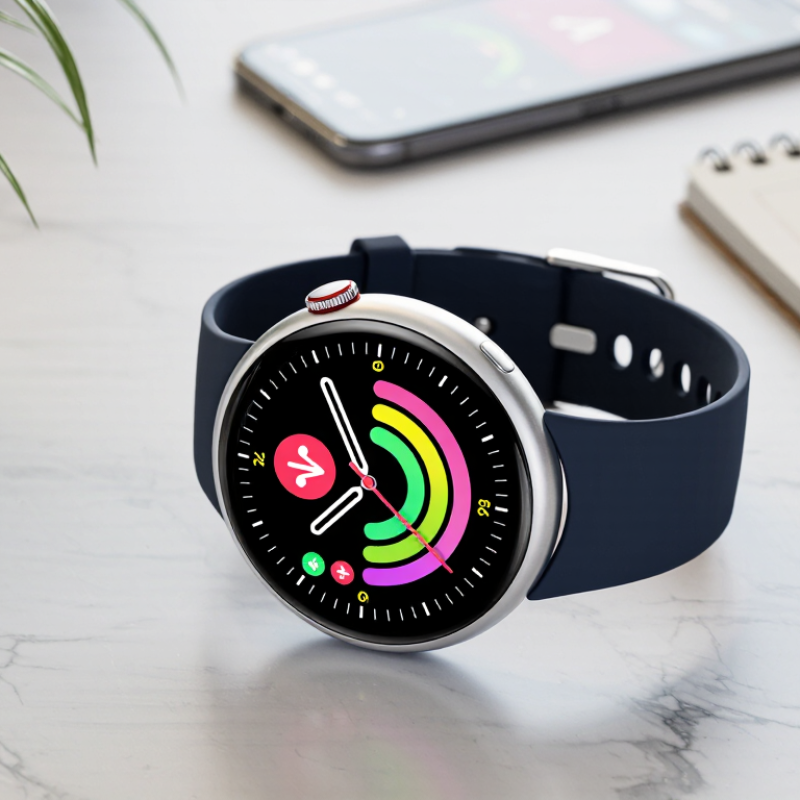
Before choosing a round dial smartwatch, define how it will fit into an ordinary day. A runner may need accurate GPS, interval alerts, and sweat resistance. A commuter may value clear notifications, contactless payments, and comfortable battery life. For sleep tracking, a light case and soft strap can matter more than a bright display. Small details matter.
List three daily situations and the information needed in each one. During a morning walk, step count and heart-rate trends may be enough. At work, discreet vibration alerts can reduce phone checking. On a weekend hike, offline navigation and weather updates become more useful. Keep it simple. A watch with too many unused features can feel like a tiny control panel on the wrist.
I once chose a feature-rich model and ignored its charging routine. That was a poor decision. Battery claims should be checked against real settings, including screen brightness, GPS use, and notifications. Independent testing is helpful, but results still vary by person. Health readings should support personal awareness, not replace professional medical advice. Review privacy controls, data storage, repair options, and return terms before buying. A round dial may look elegant, yet comfort, readable menus, and dependable operation decide whether it stays on your wrist.
| Tip | Decision Dimension | Practical Target | Daily Use Case | What to Check Before Buying | Priority |
|---|---|---|---|---|---|
| 1 | Define Your Main Purpose | Choose one primary role: notifications, fitness tracking, health monitoring, navigation, or timekeeping. | A commuter may value alerts and transit directions, while a recreational athlete may focus on workout tracking and recovery data. | List the three functions you will use most often. Avoid paying for advanced features that do not match your routine. | High |
| 2 | Select the Right Case Size | Compare the case diameter, thickness, and lug-to-lug length with your wrist size and clothing style. | A compact case is usually more comfortable during sleep and on smaller wrists; a larger case can improve readability. | Measure your wrist with a flexible tape and compare the dimensions in millimeters. Consider whether the watch fits under a shirt cuff. | High |
| 3 | Evaluate Screen Readability | Look for a bright, high-contrast display with adjustable brightness and an optional always-on mode. | Outdoor runners need readable workout data in sunlight, while office users may prefer a dimmer screen and discreet notifications. | Review brightness behavior in direct sunlight, low light, and during wrist movement. Check whether always-on mode significantly reduces battery life. | High |
| 4 | Match Battery Life to Your Routine | Select a battery capacity and charging cycle that can cover your normal schedule, including overnight wear if required. | People who track sleep may prefer several days of typical use and a short, convenient charging period. | Separate manufacturer estimates for basic use, typical use, GPS use, and always-on display use. Confirm charging time and charger type. | High |
| 5 | Check Water and Dust Resistance | For exercise and everyday exposure, choose a clearly stated water-resistance rating suitable for swimming or showering when applicable. | Swimmers, outdoor workers, and users in rainy climates need stronger protection than someone who mainly wears the watch indoors. | Read the exact rating and its limitations. Water resistance is not permanent, and hot water, soap, pressure, or salt water may affect seals. | High |
| 6 | Assess Health and Fitness Features | Prioritize only the sensors and metrics relevant to your goals, such as heart rate, steps, sleep, GPS, or blood oxygen trends. | A beginner may need activity duration and heart-rate trends, while a distance runner may require route tracking and pace data. | Verify which features work automatically, which require a phone, and whether the device provides trends rather than medical diagnoses. | Personal |
| 7 | Confirm Phone Compatibility | The watch must support your phone operating system and the required companion application. | Compatibility affects notifications, contact syncing, firmware updates, data export, and access to downloadable applications. | Check the minimum phone operating-system version, Bluetooth requirements, account requirements, and whether key functions work without a phone nearby. | High |
| 8 | Review Comfort and Materials | Choose a case and strap that feel comfortable for long periods and suit your skin sensitivity and activity level. | A breathable strap may be preferable for workouts, while a softer or lighter strap can improve sleep comfort. | Inspect case weight, strap width, buckle design, ventilation, replaceability, and the availability of suitable strap materials. | Medium |
| 9 | Consider Controls and Smart Functions | Select the control method that feels natural: touchscreen, crown, physical buttons, voice control, or a combination. | Physical buttons can be easier to use with gloves or during exercise, while touch controls may be faster for everyday navigation. | Test menu responsiveness, notification actions, call handling, music controls, payment availability, and voice features in your region. | Personal |
| 10 | Compare Total Ownership Value | Evaluate purchase price, warranty, repair options, replacement straps, software support, and data privacy practices. | A lower initial price may not be economical if accessories are difficult to replace or software support ends quickly. | Read the warranty terms, update policy, return period, subscription requirements, app permissions, and available health-data export options. | High |
List three daily situations and the information needed in each one. Keep the list practical.
Step counts and heart-rate trends may be enough. You may not need advanced workout tools.
Clear notifications, discreet vibration, and comfortable battery life can reduce phone checking. Contactless payments may also help.
Test brightness, GPS use, and notification settings together. Published results may not match your routine.
Cases around 40–42 mm often feel comfortable. Measure the visible screen, not only the case.
Dials around 44–46 mm can show text more clearly outdoors. They may also feel heavy under a shirt cuff.
Not always. Long rectangular text can waste space near curved edges.
Choose a light case, soft strap, and slim profile. Thick lugs may press against your wrist.
OLED offers deep blacks and vivid graphics. Transflective LCD may handle sunlight better and preserve battery life.
Check adjustable brightness, touch response, viewing angle, and glare. Indoor testing can hide reflection problems.
Choosing the right Round dial smartwatch starts with understanding your daily needs, whether you want convenient notifications, fitness motivation, health monitoring, or a stylish accessory for work and travel. Consider the dial’s size, shape, readability, and display technology to ensure it feels comfortable and remains clear in different lighting conditions. You should also review health-tracking functions, exercise modes, smart notifications, navigation tools, and other features that match your routine rather than paying for options you may rarely use.
Before making a decision, check compatibility with your phone, expected battery life, charging convenience, water resistance, materials, and overall comfort during extended wear. Reliable software support and durable construction can make a major difference over time. Finally, compare prices with warranty coverage, customer service, update policies, and long-term usefulness. The best choice is not necessarily the most expensive model, but the Round dial smartwatch that offers a balanced combination of practical features, dependable performance, comfort, and lasting value.