0%

Choosing True wireless TWS earbuds for wholesale requires more than comparing prices and glossy product photos. A buyer must examine sound quality, battery performance, comfort, connectivity, packaging, and supplier reliability together. In real purchasing work, small details often decide whether a product succeeds. A loose charging case hinge, weak microphone, or uncomfortable ear tip can create returns within weeks.

Start by defining the target customer and sales channel. Office users may value clear calls, while commuters often expect strong noise reduction and stable Bluetooth performance. Check the chipset, Bluetooth version, battery capacity, charging speed, microphone structure, and water-resistance rating. Ask for samples before placing a large order. Test each earbud separately, then test both in a busy street, a quiet office, and a long video call.

Do not trust specifications alone.

A professional supplier should provide consistent samples, transparent factory information, quality-control records, and suitable compliance documents for the destination market. Packaging should protect the case during transport and communicate essential product information clearly. Warranty terms also deserve attention. A low unit price can become expensive when defects, delayed replacements, and unclear communication appear later.

There is no perfect model. I have seen attractive earbuds fail because their touch controls were too sensitive. I have also seen modest designs perform better after careful tuning. That is why wholesale decisions should combine hands-on testing, supplier audits, customer feedback, and realistic margin calculations. The best choice is not always the newest product. It is the model that performs reliably, fits the market, and supports sustainable cooperation.
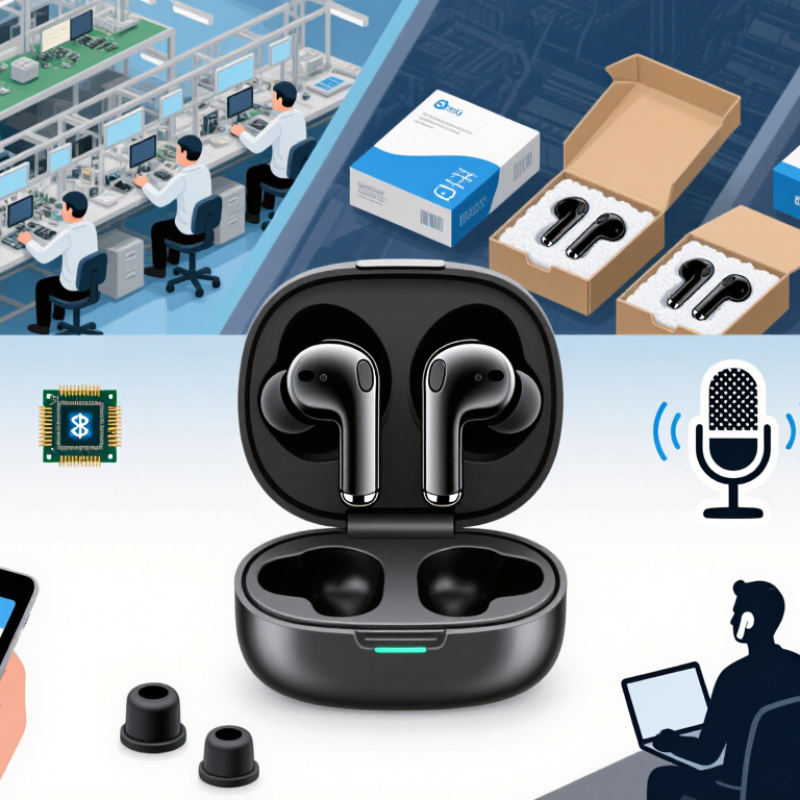
How to Choose True Wireless TWS Earbuds for Wholesale?

Define Wholesale Requirements for True Wireless TWS Earbuds

Before choosing true wireless TWS earbuds for wholesale, define the buyer and selling environment. A budget model for convenience stores needs different features from one sold through electronics retailers. Grand View Research valued the global TWS market at approximately USD 29 billion in 2022 and projected a 14.3% CAGR through 2030. Demand is strong, but product expectations are becoming stricter.

Write down your target retail price, wholesale margin, MOQ, and expected monthly volume. Then specify battery life, charging case capacity, Bluetooth version, microphone performance, latency, and water resistance. For fitness channels, an IPX4 rating may be insufficient. For office customers, call clarity can matter more than heavy bass. Counterpoint Research reported continued TWS shipment growth in 2023, but price competition remains intense. A low unit price can still be expensive.

Ask suppliers for laboratory test results, battery-cycle data, sample units, packaging dimensions, and warranty procedures. Confirm whether replacement parts are available. Check certification documents required in your sales markets, and verify them independently. Do not rely only on a polished specification sheet. In practice, real battery performance may fall below advertised figures. We sometimes overvalue ANC and ignore hinge durability. That is a costly mistake. Set acceptance standards before placing a purchase order, including defect limits, delivery tolerance, and random inspection procedures.

Evaluate Sound Quality, Battery Life, and Wireless Performance

When choosing true wireless TWS earbuds for wholesale

Test sound quality with real music and spoken audio. A balanced tuning should keep vocals clear without making bass feel heavy. Listen at low, medium, and higher volumes. Harsh treble may appear only after several minutes. I once approved a sample too quickly, and its weak microphone became obvious during longer calls. That mistake changed our evaluation process.

Battery life needs practical testing

Not only supplier figures. Play audio continuously with the earbuds at a comfortable volume, then record the actual running time. Check how quickly the charging case restores both earbuds. Battery performance can drop after repeated charging cycles.

Wireless stability also deserves attention

Test the earbuds in a busy office, near routers, and through several rooms. Watch for dropouts, pairing delays, or noticeable audio lag during video playback. A stable connection often matters more than a slightly richer sound profile.

Tips:

Request several samples from the same production batch. Compare left and right channel volume. Test calls in a noisy outdoor area. Confirm charging behavior after one week of daily use. Keep written results for sound, battery, range, and comfort. Some results may still vary between users, so avoid promising perfect performance. Ask for clear technical data and independent quality records before placing a large order.

Check Design, Comfort, Durability, and Safety Standards

How to Choose True Wireless TWS Earbuds for Wholesale?

Design should support daily handling, not only product photography. Counterpoint Research estimated that global TWS shipments exceeded 300 million units in 2023, increasing pressure for wholesalers to select practical designs.

A compact charging case fits smaller pockets. Clear left and right markings reduce user mistakes. Physical controls may work better than touch panels in rain or with gloves.

I have found that glossy shells look premium but show fingerprints quickly. That detail is easy to miss.

Comfort directly affects repeat use. Check ear-tip sizes, nozzle angles, and total earbud weight with sample testing. A stable fit matters during walking, commuting, and long calls. The fit should not feel tight.

Ask testers to wear each sample for at least two hours. Their feedback may be inconsistent, but that is useful.

Canalys reported that comfort, sound quality, and battery life remain important purchase factors in the personal audio market. Do not rely only on supplier specifications.

Durability requires evidence. Review hinge cycles, charging-port strength, sweat resistance, and drop-test records. An IP rating should reference IEC 60529 testing, not vague “waterproof” language.

Safety files should include battery testing under IEC 62133-2 and transport testing under UN 38.3. For electronic safety, IEC 62368-1 may apply in relevant markets.

Also verify RoHS or REACH documentation where required. Ask for laboratory reports with model numbers and dates.

Certificates can be incomplete, outdated, or linked to another product. That uncomfortable check protects both inventory and users.

Compare Supplier Reliability, Customization, and Minimum Order Terms

How to Choose True Wireless TWS Earbuds for Wholesale?

Supplier reliability should come before a low quotation. Counterpoint Research reported that global TWS shipments exceeded 300 million units in 2023. This scale creates intense price pressure and uneven factory quality. Request recent production records, battery test results, and failure-rate data. A stable supplier should explain component changes clearly. Ask for a replacement policy with written response times. One attractive sample proves little.

Customization also needs practical limits. Confirm logo placement, case color, packaging, app language, and firmware support. Ask whether customized molds require separate tooling fees. Small changes can affect testing schedules and inventory planning. I would not accept vague promises about software updates. A factory may offer many options, yet lack engineers for small wholesale orders. That risk is easy to miss.

Tips: Compare three suppliers using the same checklist. Request ten random samples, not one perfect unit. Test pairing, microphone clarity, charging temperature, and standby performance. Review the MOQ beside your expected sales cycle. A lower MOQ helps testing, but may increase unit costs. Negotiate a pilot order before committing to custom packaging. Keep every specification in the purchase agreement. Mistakes still happen, even with experienced buyers.

How to Choose True Wireless TWS Earbuds for Wholesale?

Recommended evaluation weight for comparing supplier reliability, customization, and minimum order terms

Reliability receives the highest weighting because stable delivery, consistent product quality, and responsive communication directly affect wholesale risk. Customization should be assessed through available logo, packaging, color, firmware, and accessory options. Minimum order terms should include sample quantities, initial production MOQ, reorder MOQ, lead time, and payment conditions. This framework is a practical starting point and should be verified with supplier quotations, samples, and production records.

Calculate Total Costs, Quality Risks, and Long-Term Wholesale Value

Choosing true wireless TWS earbuds for wholesale requires more than comparing factory prices. Calculate the landed cost per pair, including samples, packaging, freight, taxes, inspection, and replacement units. A low quotation can become expensive after shipping delays or high return rates.

Request production samples before placing a large order.

Check pairing speed, microphone clarity, charging stability, touch controls, and comfort after two hours. Test several batches, not just one pair. Ask for battery capacity records, cycle-test results, and safety documentation. Confirm that the supplier follows applicable market requirements for wireless and battery products. Small defects matter. A loose charging pin can create repeated customer complaints.

Track the defect rate during early shipments. For example, a two percent failure rate may look acceptable, but it can damage margins on five thousand units. Include clear inspection standards and a practical warranty process.

I once underestimated the cost of replacement shipping; the spreadsheet looked profitable, but the final margin was disappointing. No spreadsheet is perfect. Recheck assumptions with real sales data.

Long-term wholesale value comes from stable quality, available spare parts, consistent packaging, and responsive technical support. Earbuds with slightly higher unit costs may produce fewer refunds and better repeat orders. Review performance after ninety days. Compare return reasons, battery complaints, and customer feedback. Cheap today is not always valuable tomorrow.

FAQS

What should I define before buying TWS earbuds wholesale?

Identify your target customer and selling environment. A convenience store may need a budget model. Electronics shoppers may expect stronger features. Set the retail price, margin, MOQ, and monthly volume. Write these figures down.

Which features should I compare between wholesale earbuds?

Compare battery life, case capacity, Bluetooth version, microphone clarity, latency, and water resistance. Office users may value clear calls over strong bass. Fitness customers may need better water protection than IPX4. Feature lists can be misleading.

How can I judge supplier reliability?

Request recent production records, battery tests, and failure-rate data. Ask how the supplier handles component changes. Require written replacement procedures and response times. One sample proves little.

How many samples should I test before ordering?

Request several samples from different production batches. Test pairing speed, microphone clarity, charging temperature, touch controls, and standby performance. Wear them for two hours. Test several batches.

What customization details need written confirmation?

Confirm case color, logo placement, packaging size, app language, and firmware support. Ask about tooling fees for custom molds. Confirm testing schedules and delivery effects. Too many options can create delays.

How should I calculate the real wholesale cost?

Add samples, packaging, freight, taxes, inspections, and replacement units to the factory price. Include possible return and delay costs. A low quotation may hide expensive shipping. The spreadsheet can lie.

What quality standards should appear in the purchase agreement?

Define defect limits, delivery tolerance, inspection methods, and warranty procedures. Check loose charging pins, unstable charging, weak microphones, and pairing failures. Track defects during early shipments. Mistakes still happen.

How can I measure long-term wholesale value?

Review returns, battery complaints, spare-part availability, packaging consistency, and technical support after ninety days. Slightly higher costs may reduce refunds. Compare repeat orders with customer feedback. Cheap today is not always valuable tomorrow.

Conclusion

Choosing the right True wireless TWS earbuds for wholesale begins with clearly defining your target market, expected order volume, preferred features, and price range. Evaluate core performance factors such as sound quality, battery life, Bluetooth stability, connection range, microphone clarity, and charging efficiency. At the same time, inspect the earbuds’ design, wearing comfort, material durability, water resistance, packaging quality, and compliance with applicable safety and product standards.

A dependable supplier should offer consistent production quality, transparent communication, flexible customization, reliable sampling, and reasonable minimum order terms. Before placing a large order, calculate the complete cost, including product pricing, packaging, shipping, testing, support, and potential quality-related losses. Comparing warranty policies, production capacity, lead times, and after-sales service can reveal the true long-term value of each option. The best wholesale choice is not always the lowest-priced product, but one that balances performance, reliability, customer appeal, risk control, and sustainable profit margins.


Elliot

Elliot

Elliot is a professional marketer with a strong understanding of the company’s products and the needs of the people who use them. He combines product knowledge with clear, practical communication, helping readers understand key features, compare options, and make informed decisions. Through regular......