0%

Open ear OWS earbuds are moving from niche accessories to everyday audio tools. Their open design leaves the ear canal unobstructed, helping users stay aware of nearby voices, traffic, and workplace sounds. Yet openness alone does not guarantee comfort or clear audio. Fit, sound leakage, battery life, call quality, and stable Bluetooth performance still matter.

China has a deep supply chain for acoustic components, batteries, plastics, and product assembly. That can support rapid development, but a factory’s location is not proof of quality. Buyers should examine production experience, testing methods, quality controls, and after-sales support. A polished sample is useful. Consistent batches matter more.

Headphone researcher Dr. Sean Olive’s published work offers a relevant principle: listener preference matters when judging audio quality. This is a paraphrase, not a direct quotation. A careful comparison should therefore consider both measurements and real listening, rather than relying on a brand’s claims alone. Try calls in a noisy street. Check whether glasses press against the ear hooks. Listen for thin vocals or bass that disappears outdoors.

This guide explores ten Chinese manufacturers associated with Open ear OWS earbuds and the capabilities buyers may want to verify. Company rankings can change, and public information may be incomplete. Treat this list as a starting point, not a final endorsement. Some details deserve a second look.
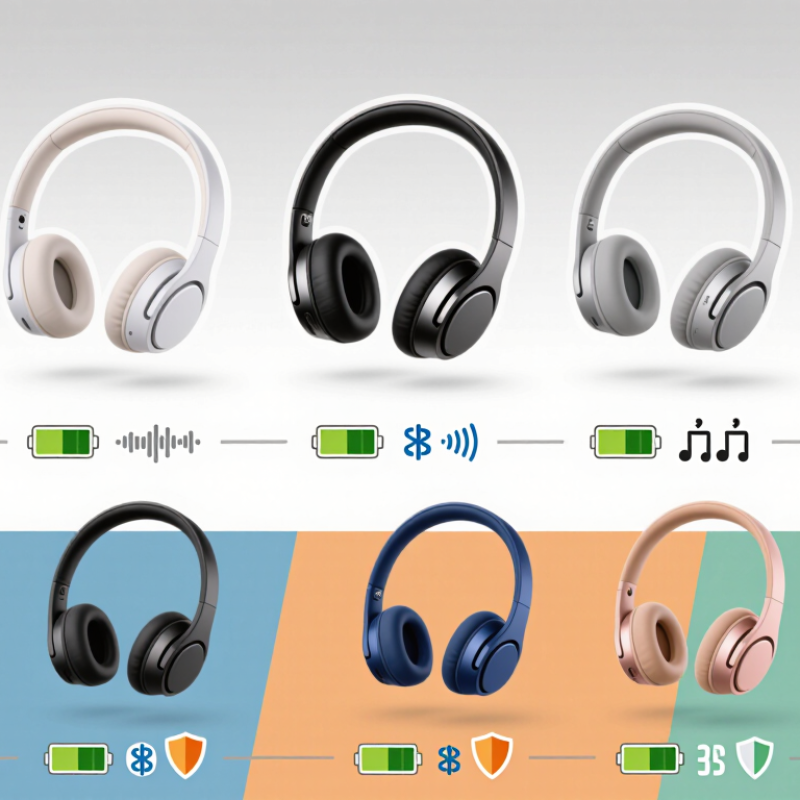
China Top 10 Open Ear OWS Earbuds Manufacturers?

What Open-Ear OWS Earbuds Are and How They Work

Open-ear OWS earbuds sit beside the ear canal instead of sealing it. Most use small air-conduction drivers that direct sound toward the ear, while leaving the canal open. Some models use bone conduction, sending vibrations through the bones around the ear. OWS describes a wearing style, not one single audio technology. That distinction is easy to miss. Without a sealed tip, outside sounds can remain audible, though fit and volume affect how clearly you hear them. Still, they are not perfect: busy traffic or loud machinery can mask audio and make listening harder.

The WHO-ITU Global Standard for Safe Listening Devices and Systems sets an adult reference level of 80 dB, paired with up to 40 listening hours per week. WHO’s 2021 World Report on Hearing estimates that 1.5 billion people worldwide live with hearing loss, and projects nearly 2.5 billion by 2050. These figures do not show that open-ear earbuds prevent hearing damage. Loud playback can still pose a risk, even without ear tips. On a quiet walk, ambient sound may come through; beside a noisy road, the same earbuds may tempt users to raise the volume. Fit varies, too, so one listening test is not enough to judge comfort.

How Chinese OWS Earbud Manufacturers Are Evaluated

Evaluating a Chinese open-ear OWS manufacturer takes more than comparing claimed battery life or driver size. IDC’s Worldwide Quarterly Wearable Device Tracker reported 534.6 million wearable-device shipments globally in 2024, showing the scale of the wider market. That figure does not isolate OWS earbuds, so it should not be treated as an OWS sales estimate. It does, however, underline why buyers should examine production capacity alongside product quality. Ask for repeatable test records, not just a polished sample. Check how the factory measures sound balance, speech clarity, Bluetooth stability, and audio leakage in a quiet room and a busy street. Small fit changes matter.

Manufacturing reviews should also inspect tooling, incoming-material checks, assembly records, and batch-level defect tracking. A practical audit follows one unit from component receipt to final packaging. Request battery test conditions, such as volume level and playback mode; otherwise, runtime claims are hard to compare.

Ask how the supplier handles fit complaints and firmware issues after shipment. Independent lab reports can support these checks, but their test methods must match the intended use. A spreadsheet can look perfect. It may still miss real-world discomfort. No single score captures comfort across different ears, and supplier documentation can be incomplete. That is a limitation worth recording, not hiding.

Profiles of 10 Leading Chinese Open-Ear OWS Earbud Manufacturers

China’s open-ear OWS manufacturers differ in more than appearance. A useful profile of ten leading suppliers should compare acoustic engineering, fit testing, production scale, and product-development support. Some focus on lightweight ear hooks; others refine clip-on structures or directional sound outlets. Small details matter: pressure behind the ear, glasses compatibility, and whether speech remains clear beside traffic.

IDC’s Worldwide Quarterly Wearable Device Tracker reported 534.6 million wearable-device shipments worldwide in 2024, up 6.1% year over year. That figure covers more than OWS earbuds, so it is market context, not proof of open-ear demand alone. Still, it points to a broad, competitive wearable market. For each Chinese manufacturer, buyers should check measurable details: driver size, battery runtime at stated volume, water-resistance test conditions, and quality-control procedures. Claims need evidence.

The ten profiles should also distinguish factories with in-house acoustic teams from suppliers relying mainly on external design support. Ask for sample consistency, tooling timelines, and service after shipment. Fit matters. One limitation is that public company data can be uneven, and product specifications rarely use identical test methods. A careful comparison should flag those gaps instead of treating every published figure as directly comparable.

China’s Open-Ear OWS Earbud Manufacturing Landscape

Bluetooth Core specification release timeline: a standards reference for evaluating technology context across open-ear earbud manufacturers.

Release dates are based on Bluetooth SIG specification announcements. A specification’s release does not indicate that a particular earbud model supports it; support varies by product.

Comparison of Their Products, Technologies, and Manufacturing Capabilities

Comparing China’s open-ear OWS manufacturers requires more than checking driver size or battery claims. Canalys reported that global true wireless stereo shipments reached 337 million units in 2024, up 6% year over year. This is a useful market benchmark, not an OWS-only figure. Buyers should compare each factory’s acoustic tuning, Bluetooth stability, microphone performance, and fit testing instead of treating all wireless-earbud data as open-ear evidence.

Manufacturing capability shows up in small details. Ask whether samples undergo repeated wear tests, sweat exposure, drop checks, and battery-cycle testing. Request production records for defect rates and consistency between sample units and mass production. A supplier with in-house tooling may adjust ear hooks faster, while an experienced acoustic team can refine sound leakage and speech clarity. Yet neither capability guarantees comfort across different ear shapes. Small details matter. I would also check how the factory documents test conditions; a claimed battery figure means little without volume level and codec settings. One weakness in many comparisons is reliance on polished samples. Real production batches can vary. A factory tour or third-party inspection can help verify processes, but it cannot replace testing finished units.

How to Choose a Chinese OWS Earbud Manufacturer

Choosing a Chinese OWS earbud manufacturer takes more than comparing quoted prices. Open-ear designs must stay comfortable while allowing awareness of nearby sounds. Request working samples, then wear them for a full commute or a thirty-minute walk. Check pressure near the ears, stability with glasses, and whether controls are easy to find. Fit matters.

Ask how the manufacturer controls sound quality between production batches. Request clear testing procedures for speaker output, microphones, battery performance, and charging. A detailed report is more useful than a vague promise. If possible, compare several samples and listen in a quiet room and beside ordinary street noise. Small differences can reveal inconsistent tuning. They can also be hard to judge from one sample alone.

Review the factory’s production process, quality records, and ability to handle a pilot order before discussing large volumes. Ask who manages tooling changes and how defective units are tracked. Verify relevant test documents for your target market rather than relying on a supplier’s general assurances. Communication matters, too: technical answers should be specific and consistent. I would not choose a supplier from a polished presentation alone. A delayed reply or unclear report is not proof of poor quality, but it deserves a closer look.

FAQS

What does open-ear OWS mean?

These earbuds sit beside the ear canal instead of sealing it. Many use air-conduction drivers; some use bone conduction. The canal stays open.

Can users still hear sounds around them?

Often, yes, but fit and volume affect what reaches your ears. Traffic or machinery can mask audio. Open-ear does not mean risk-free.

What does the safe-listening reference level say?

The WHO-ITU standard gives adults a reference level of 80 dB, with up to 40 listening hours weekly. It is not a personal safety guarantee.

Do open-ear earbuds prevent hearing damage?

The article provides no evidence that they prevent hearing damage. Loud playback can still pose a risk. Keep that in mind.

What should buyers compare between manufacturers?

Compare acoustic tuning, fit testing, production scale, and development support. Check pressure behind the ear and glasses compatibility. Small details matter.

What should battery and water-resistance claims include?

Check the stated volume and codec for battery runtime. Ask about water-resistance test conditions, too. Claims need evidence.

How can buyers check manufacturing quality?

Ask whether samples undergo wear, sweat, drop, and battery-cycle tests. Request defect records and sample-to-production consistency. A factory visit helps, but it is not enough.

Do wearable shipment figures prove OWS demand is growing?

No. Global wearable shipments reached 534.6 million in 2024, but included many device types. True wireless shipments reached 337 million. Neither figure isolates OWS demand.

Conclusion

This article introduces Open ear OWS earbuds, explaining their open-fit design, how they deliver sound while allowing users to remain aware of their surroundings, and the technologies that support comfort, connectivity, and audio performance. It also outlines the criteria used to assess Chinese manufacturers, including product design, engineering expertise, quality control, production capacity, customization options, and after-sales support.

Profiles of ten leading manufacturers provide a structured overview of their products, technologies, and manufacturing capabilities. A comparison helps readers understand how suppliers may differ in areas such as acoustic design, materials, development services, and order flexibility. The article concludes with practical guidance for choosing a manufacturer, encouraging buyers to define their product requirements, verify relevant capabilities, evaluate communication and quality processes, and compare potential suppliers carefully before making a decision.


Oliver

Oliver

Oliver is a professional marketing specialist with a strong understanding of the company’s products and the needs of the customers they serve. He combines careful research with practical industry knowledge to explain product features, applications, and benefits in a clear and useful way. Through......