

Strategic Manufacturing Partnership: Scaling AMOLED Smartwatches in Malaysia
The consumer electronics ecosystem across Southeast Asia is undergoing a structural transition. Driven by rapid 5G infrastructure expansion across Malaysian urban centers such as Kuala Lumpur, Penang, and Johor Bahru, demand for sophisticated wearable technology has shifted from basic step-counting bands to high-luminance AMOLED smartwatches. For Malaysian consumer brands, retail chains, telecommunication providers, and corporate importers, selecting the right original equipment manufacturer (OEM) and original design manufacturer (ODM) is the single most critical factor in securing market leadership.
As a global leader in wearable technology production—having delivered over 50 million units worldwide with an established production capacity capable of outputting a device every five seconds—our manufacturing operations provide Malaysian enterprise partners with distinct supply chain advantages. From custom hardware engineering and local SIRIM type approval compliance to bespoke software localization (including multi-lingual UI supporting Bahasa Melayu, English, and Simplified Chinese), we provide end-to-end ODM solutions tailored specifically to the Malaysian climate, consumer habits, and regulatory frameworks.
1. Hardware Architecture & AMOLED Engineering for Tropical Climates
Operating wearable devices in Malaysia presents unique engineering challenges. High ambient relative humidity (often exceeding 80%), intense tropical solar radiation, and frequent heavy rain require smartwatches to maintain exceptional water resistance and display legibility without sacrificing battery efficiency. Standard LCD and low-tier IPS screens suffer from reflective glare and high backlight power consumption under midday equatorial sunlight.
Our direct-factory AMOLED smartwatch solutions leverage self-illuminating organic light-emitting diode displays that solve these physical constraints through precise optoelectronic engineering:
- Peak Luminance & Sunlight Readability: Our customized AMOLED panels deliver peak brightness levels from 600 nits to over 1,000 nits. By emitting light on a pixel-by-pixel basis without requiring a uniform LED backlight layer, our displays deliver ultra-high contrast ratios (>100,000:1). Users retain perfect display visibility during midday outdoor activities in Malaysia without experiencing color bleaching.
- Always-On Display (AOD) Power Optimization: Traditional smartwatch displays draw continuous current across the entire panel backlight. Our AMOLED driver ICs utilize localized sub-pixel clocking. When operating in low-power AOD mode, only necessary time/metric pixels are energized, reducing display power consumption by up to 68% compared to traditional backlit TFT panels.
- Tropical Sweating & IP68 / 5ATM Moisture Sealing: High ambient heat and humidity accelerate corrosion on poorly sealed casing seams. Our assembly facilities utilize automated double-dispensing glue processes alongside high-precision CNC zinc-alloy and 316L stainless steel structural frames. Acoustic ports (microphones and speakers for Bluetooth calling) are shielded with hydrophobic micro-porous membrane filters rated for IP68 and 5ATM water immersion, preventing moisture ingress during tropical rainstorms or swimming sessions.
- Salt-Sweat Resistant Coatings: Metallic casings undergo specialized PVD (Physical Vapor Deposition) electroplating and anti-fingerprint oleophobic nano-coating to prevent surface oxidation caused by continuous contact with human sweat in humid environments.
1000+ Nits Brightness
High-luminance AMOLED panels engineered for continuous outdoor readability under direct Malaysian equatorial sunshine.
IP68 & 5ATM Protection
Hydrophobic acoustic membranes and double-dispensing seals guard against intense humidity, rain, and water immersion.
Low-Power Microcontrollers
Advanced Realtek and Jerry chipset architecture combined with localized sub-pixel clocking yields 7 to 15 days battery life.
2. Localized Market Trends & Consumer Search Intent in Malaysia
Executing an effective B2B procurement strategy requires a granular understanding of local market trends. Search intent analysis across major Malaysian e-commerce platforms (such as Shopee Malaysia and Lazada Malaysia) as well as Google search volume in the Klang Valley indicates distinct purchasing patterns among Malaysian consumers:
A. Demand for Multi-Lingual & Cultural Firmware Features: Malaysia's multi-ethnic demographic (Malay, Chinese, Indian, and expatriate communities) creates a strong preference for devices offering seamless multi-language UI switching. Our SDK software engineering team bakes full character sets for Bahasa Melayu, English, and Simplified Chinese into the system ROM. Furthermore, localized firmware options include Islamic lifestyle features such as Qibla compass direction calculation algorithms, automated Azan prayer time alerts based on GPS coordinates, and Hijri calendar synchronization.
B. Bluetooth HD Hands-Free Calling Ecosystem: Urban traffic congestion in major cities like Kuala Lumpur and Penang makes hands-free calling an essential feature for motorcyclists and commuters. Smartwatches equipped with high-fidelity Bluetooth 5.3 chips, integrated AAC audio codecs, and noise-suppression microphones allow users to take calls directly from their wrist while navigating traffic or working in noise-intensive environments.
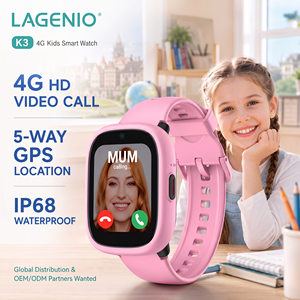
C. Cellular-Connected Kids & Senior Safety Wearables: Working parents in Malaysia are increasingly purchasing 4G SIM-enabled kids smartwatches equipped with real-time GPS tracking, geo-fencing safety boundaries, and two-way video calling. Similarly, aging population demographics drive demand for luxury health monitoring watches featuring continuous SpO2 oxygen telemetry, dynamic optical heart rate tracking, ECG recording, and automatic fall-detection SOS calling.
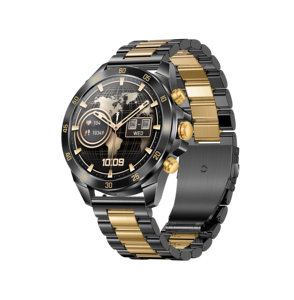
D. Enterprise & Corporate Gifting Assortments: High-end metal strap smartwatches with AMOLED displays (such as our R1 Pro Stainless Steel and Glitz series) are heavily requested by Malaysian corporations for employee wellness initiatives, annual executive gifts, and custom-branded promotional merchandise.
3. B2B Comparison: Standard Commodity Wearables vs. Our OEM Factory Specifications
To highlight the information gain and technical superiority of our smartwatch manufacturing capabilities, the matrix below details how our custom OEM production compares against standard off-the-shelf consumer wearables:
| Feature Benchmark | Standard OEM / Generic Smartwatches | Our Custom Factory Specifications for Malaysia |
|---|---|---|
| Display Matrix | TFT / IPS LCD Backlit Panel (250-400 nits) | HD AMOLED On-Cell Screen (600-1000+ nits) |
| Enclosure & Finishing | ABS Plastic / Recycled Zinc Alloys | PVD Coated 316L Stainless Steel & High-Density Zinc Alloy |
| Microcontroller (MCU) | Single-Core Legacy Chipsets (High Power Draw) | Dual-Core Low-Power Realtek / JL Chipsets with GPU Engine |
| Waterproofing Architecture | Basic Rubber Gaskets (IP65 / IP67) | Double Liquid Dispensing + Hydrophobic Membrane (IP68 / 5ATM) |
| Regulatory Approval | Uncertified or Basic CE Only | Full SIRIM Type Approval Compliance Ready (MCMC Specs) |
| Software Customization | Generic Factory UI with Fixed English/Chinese | Custom Boot Logos, Proprietary App Pairing, Bahasa Melayu UI |
| Biometric Sensors | Single Photo-Diode Heart Rate Sensors | Multi-Channel Optical PPG Array (SpO2 + Dynamic HR + Stress) |
4. SIRIM Certification & Compliance Guide for Malaysian Importers
Importing electronic communications and wireless devices into Malaysia requires mandatory regulatory approval from SIRIM QAS International and compliance with the Malaysian Communications and Multimedia Commission (MCMC) standards. Non-compliant wireless devices are subject to custom clearance holds or confiscation at Port Klang, Penang Port, or KLIA Cargo Terminals.
As an experienced global exporter, our factory technical team streamlines the SIRIM certification process for our Malaysian brand partners:
- RF & Telecommunications Lab Test Reports: Our Bluetooth, 4G, and 5G wearable products are pre-tested to meet ETSI and FCC radio frequency emission standards. We provide complete CE RED test reports, SAR (Specific Absorption Rate) health safety compliance documents, and Bluetooth SIG qualification documentation.
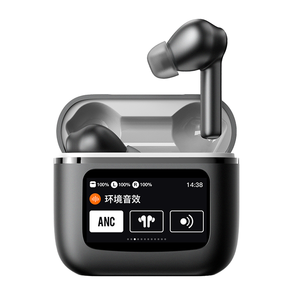
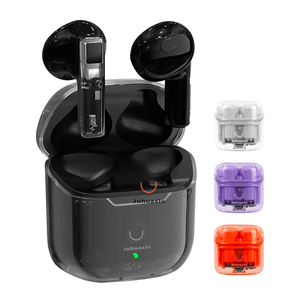
- Battery Safety Documentation: All lithium-ion polymer batteries used in our smartwatches and wireless earbuds undergo rigorous UN38.3 thermal stress, altitude simulation, and crush testing. We furnish detailed SDS (Safety Data Sheets) and IEC 62133 safety certificates required by Malaysian maritime and aviation customs authorities.
- SIRIM e-Comms Type Approval Assistance: We work directly with licensed local Malaysian applicants to register factory technical files on the e-Comms portal, expediting the issuance of the SIRIM Certificate of Conformity (CoC) and physical or electronic SIRIM security labels (e-Labelling).
5. Custom OEM/ODM Production Workflow & Quality Control Pipeline
Quality reliability is the foundational core of our brand equity. With millions of units deployed across demanding global markets, our manufacturing plants adhere to strict ISO 9001 and ISO 14001 quality management procedures. Every smartwatch transitioning through our automated SMT (Surface Mount Technology) assembly lines undergoes rigorous multi-stage testing:
Stage 1: PCBA Board SMT & Automated Optical Inspection (AOI)
High-speed Yamaha SMT placement machines mount micro-controllers, power management ICs, Bluetooth RF modules, and sensors onto multi-layer PCB boards. Automated Optical Inspection (AOI) systems scan 100% of boards for soldering bridging, component alignment, or pin defects.
Stage 2: Acoustic & RF Frequency Calibration
Assembled PCBA boards pass through automated RF shielding test chambers to calibrate Bluetooth transmitter power, antenna impedance matching, and acoustic frequency responses for microphones and speakers, ensuring noise-free hands-free calling.
Stage 3: Automated Pressure Chamber Leak Testing
Before casing seal curing, every smartwatch housing is subjected to positive and negative air-pressure differential chambers to verify hermetic sealing prior to water immersion testing.
Stage 4: Optical Display & Touch Response Calibration
High-resolution industrial cameras inspect AMOLED panels for dead pixels, color uniformity, and touch-screen glass linearity across all coordinate points.
Stage 5: Burn-In Aging & Battery Cycle Stressing
Fully assembled devices undergo a continuous 48-hour active burn-in test inside temperature-controlled chamber rooms (cycling between 20°C and 50°C) to eliminate premature component failures prior to final packaging.
Flexible OEM MOQ & Private Labeling
We accommodate both emerging local digital brands and large corporate procurement teams with scalable Minimum Order Quantities (MOQ), custom artwork laser-engraving, and bespoke retail box packaging.
Streamlined Logistics to Malaysia
Established freight forwarding channels offering DDP (Delivered Duty Paid) air and sea shipping directly to warehouses in West Malaysia (Port Klang/KLIA) and East Malaysia (Kuching/Kota Kinabalu).