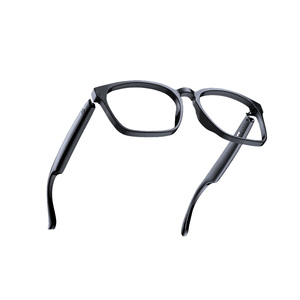
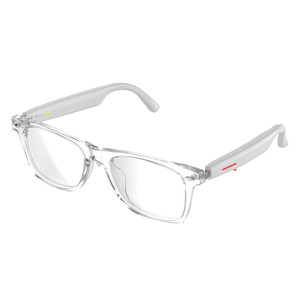
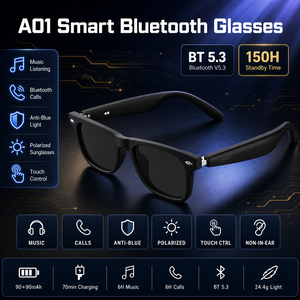
As a premiere Camera Smart Glasses Factory & Supplier, we bridge the gap between optical craftsmanship and miniaturized electronics. Developing commercially viable smart eyewear requires rigorous micro-engineering, precise thermal management, and advanced optical alignment. Our ISO9001-certified cleanroom facility operates automated Surface Mount Technology (SMT) lines specifically optimized for high-density, flexible printed circuit board (FPCB) assemblies fitted inside ergonomic spectacle temples.
Information Gain Benchmark: Unlike consumer re-sellers, direct factory OEM partnership gives B2B buyers access to raw image signal processor (ISP) tuning, optical lens customization (prescription, photochromic, polarized), firmware SDK access, and custom cryptographic battery packaging.
Core Engineering Competencies & Factory Direct Capabilities
Our OEM/ODM manufacturing facility integrates end-to-end hardware and software R&D under one roof, guaranteeing robust quality control and rapid time-to-market:
Active Optical Alignment (AA)
Micro-camera modules are calibrated using automated multi-axis optical aligners to guarantee zero parallax distortion, sharp edge-to-edge focus, and perfect sensor tilt matching inside ultra-thin spectacle frames.
Thermal & Power Management
Utilizing high-density, custom-shaped Li-ion micro batteries equipped with thermal throttling algorithms, our frames dissipate heat efficiently across the temples without exceeding tactile safety limits (IEC 62368-1 standard).
Custom Firmware & App SDKs
We provide full white-label Android and iOS companion application SDKs, supporting real-time BLE 5.3 data sync, Wi-Fi 6 video streaming offloading, voice command parsing, and cloud translation API endpoints.
Smart Eyewear Industry Development & Technology Roadmap (2025–2030)
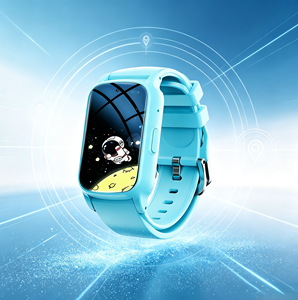
The wearable technology ecosystem is undergoing a massive architectural shift. Traditional smartwatches and TWS audio devices are increasingly converging into lightweight optical smart glasses equipped with spatial awareness, generative AI interfaces, and first-person video capture. Sourcing partners must align with factories capable of keeping pace with this multi-generational technology transition.
Edge AI & Low-Power NPU Integration: On-device Neural Processing Units (NPUs) enable real-time visual recognition, facial indexing, and instant language translation without relying solely on cloud latency or high-bandwidth cellular links.
Miniaturized EIS Camera Modules: Future camera glasses utilize sub-miniature 1/4-inch CMOS image sensors combined with gyro-assisted Electronic Image Stabilization (EIS), delivering steady 4K hands-free video recording tailored for POV vloggers, field service technicians, and security professionals.
Directional Open-Ear Acoustic Architecture: Advanced acoustic beamforming and reverse soundwave cancellation eliminate sound leakage during hands-free phone calls, delivering private, high-fidelity audio directly to the user's temporal bone structure without occluding environmental awareness.
Electrochromic & Photochromic Optical Integration: Moving beyond simple static polarized lenses, modern smart eyewear frames incorporate auto-dimming electrochromic elements that dynamically adjust tint density in response to ambient lux levels within milliseconds.
Feature Parameter
Legacy Smart Glasses (Gen 3)
Current Production Standard (Gen 6)
Next-Gen OEM Pipeline (2026+)
Video Capture
720p @ 30fps (No Stabilization)
1080p / 4K EIS Gyro-Stabilized
4K @ 60fps Spatial Video Recording
Battery Capacity / Frame Weight
110mAh / 65 grams
180mAh - 240mAh / 38 - 48 grams
280mAh Solid-State / <35 grams
Optical Lens Options
Standard Acrylic TAC Lenses
Photochromic UV400 / Prescription PC
Electrochromic Dynamic Tinting
AI Voice & Audio Sync
Basic Siri / Google Assistant Passthrough
On-Device Multi-Language Translation
LLM Local Agent Edge Inference
Ingress Protection
IPX4 Splash-proof
IP65 Dust & Water Jet Proof
IPX8 Submersible Sealed Architecture
B2B Procurement Trends & Global Supply Chain Optimization
Procuring smart eyewear at scale involves navigating unique compliance, optical safety, and wireless radio regulatory landscapes. Professional procurement teams must evaluate hardware suppliers not merely on FOB unit pricing, but on long-term engineering reliability, compliance certifications, and modular product platforms.
Essential Checklist for Smart Eyewear Sourcing Managers:
1. Global Regulatory Compliance
Ensure your supplier maintains valid FCC Part 15 (US), CE RED (Europe), TELEC (Japan), and RoHS/REACH environmental compliance test reports for both the Bluetooth MCU and battery systems.
2. Optical & Eyewear Safety Standards
Camera frames must pass Drop Ball Impact Testing (ANSI Z87.1 / ISO 12312-1) to ensure UV400 eye protection and non-shattering lens behavior during outdoor accidental impacts.
3. Firmware Security & Privacy
For camera-enabled hardware, hardware-level LED recording indicators are mandatory in legal jurisdictions to prevent privacy violations and guarantee user transparency in public environments.
Frequently Asked Sourcing Questions (B2B FAQ)
Find authoritative answers to common commercial, engineering, and logistical queries regarding custom camera smart glasses production.
What is the Minimum Order Quantity (MOQ) for custom OEM brand logo & packaging customization?
Our baseline Minimum Order Quantity (MOQ) for standard neutral stock is 100 units. For custom silk-screen brand logo placement on temples, custom Bluetooth pairing naming, and customized retail gift box printing, the standard production MOQ is 500 units per batch.
Can prescription optical lenses (myopia/astigmatism) be integrated into your camera smart glasses frames?
Yes. Our smart glasses frames feature detachable lens grooves designed according to standard optical frame dimensions. We support custom factory installation of prescription lenses (CR-39, polycarbonate, or high-index 1.67 lenses), as well as supplying bare frames directly to optical lab chains for regional edging.
How do you handle thermal control during continuous 1080p / 4K camera video recording?
We utilize high-thermal-conductivity graphite heat sinks embedded within the inner temple housing, paired with intelligent MCU power throttling. If the internal chipset temperature reaches 45°C, the system dynamically optimizes sensor bitrates to maintain comfortable skin contact temperatures under standard ISO safety parameters.
What software support is provided for regional AI voice translation integration?
We provide turn-key companion apps available on iOS App Store and Google Play Store that link via BLE 5.3. For enterprise clients requiring private server deployment or custom brand apps, we offer complete Android/iOS SDKs, API documentation, and BLE protocol stacks.
What lithium battery shipping safety certifications are provided for international freight clearance?
All integrated micro-batteries undergo rigorous safety testing and ship with complete UN38.3, MSDS (Material Safety Data Sheet), and 1.2m Drop Test documentation, allowing smooth air freight and ocean container transport under IATA and IMO shipping guidelines.
What is your factory warranty policy and defect RMA process for B2B buyers?
We offer a comprehensive 12-month factory warranty covering main board electronics, camera sensors, and optical assemblies. For bulk orders, we provide a 1% free spare unit allowance (FOC) or immediate RMA replacement credit on your subsequent production batch.
Accelerate Your Smart Eyewear Lineup Today
Partner directly with an industry-leading OEM/ODM Camera Smart Glasses Factory. Contact our engineering team for technical datasheets, custom tooling quotes, and rapid sample delivery.