Direct OEM/ODM Solutions from Premier China Acoustic & Smart Wearable Manufacturing Hubs
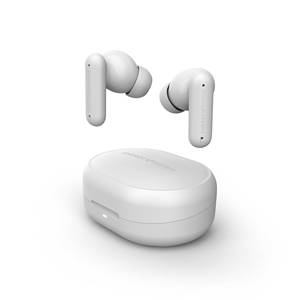
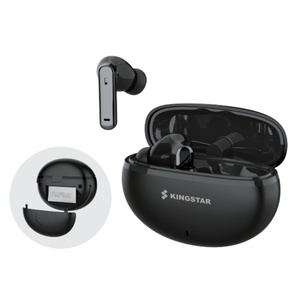
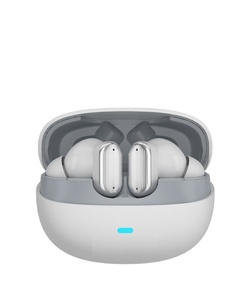
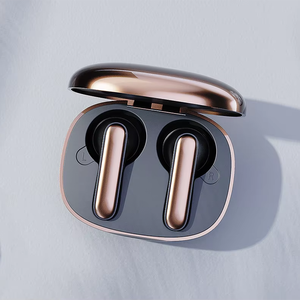
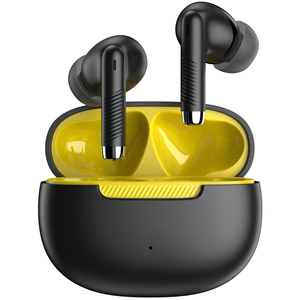
The global true wireless stereo (TWS) market has undergone a fundamental transformation, evolving from basic audio playback devices into sophisticated personal area networks (PAN) equipped with active noise cancellation (ANC), real-time AI translation, bio-metric health monitoring, and ultra-low-latency spatial audio algorithms. China remains the unquestioned epicenter of global TWS engineering, hardware synthesis, and high-precision assembly. Located across specialized tech clusters in Shenzhen, Dongguan, and Huizhou, top China TWS wireless earbuds factories manage over 82% of world audio supply chains.
For enterprise electronics brands, distributors, and private-label importers, selecting the right factory partner is no longer merely a pricing exercise. It requires an in-depth operational evaluation of acoustic testing infrastructure, surface-mount technology (SMT) precision, RF antenna calibration, Bluetooth SIG compliance, and structural quality control. This industry whitepaper outlines the technical evaluation criteria, upcoming procurement trends, supply chain dynamics, and manufacturing capabilities that define China's top tier TWS audio suppliers.
Automated High-speed Yamaha & Fuji SMT placing micro SiP components with zero alignment variance.
Equipped with SoundCheck and APx555 Audio Analyzers for rigorous frequency response curve tuning.
ISO9001, BSCI, CE, FCC, RoHS, REACH, UN38.3 battery safety, and Bluetooth QDID licensing.
Evaluating a Tier-1 China TWS earbuds factory requires looking beyond showroom samples. Industry procurement teams must inspect cleanrooms, aging rooms, and acoustic engineering facilities to ensure consistent mass-production yields. Below are the mandatory technical audits implemented by global consumer electronics leaders:
Premium sound signature reproduction requires dynamic driver pairing, balanced armature integration, and optimized acoustic cavity design. Top-tier factories utilize custom-built anechoic chambers combined with Audio Precision (APx555) equipment to test Total Harmonic Distortion (THD+N < 0.5%), Frequency Response (20Hz–20kHz alignment), and Signal-to-Noise Ratio (SNR). Furthermore, hybrid active noise cancellation (Feedforward + Feedback ANC) requires real-time gain calibration across individual left and right earbud micro-mics to avoid anti-phase cancellation imbalance.
Signal dropouts, asymmetric latency, and connection dropoffs degrade consumer satisfaction. Leading TWS factories operate full 3D OTA (Over-The-Air) RF test chambers measuring TRP (Total Radiated Power) and TIS (Total Isotropic Sensitivity). Modern Bluetooth 5.3, 5.4, and emerging 6.0 protocols require precise ceramic chip antenna placement and LDS (Laser Direct Structuring) antenna etching on the internal earbud housing to maintain a stable 15-meter transmission range despite human body attenuation.
As TWS earbud enclosures shrink while hosting larger batteries and AI chips, PCB design transitions to high-density 8-layer HDI rigid-flex boards or SiP modules. Factory SMT capabilities must include 3D Solder Paste Inspection (SPI), automated optical inspection (AOI), and X-ray inspection for BGA (Ball Grid Array) micro-soldering. High-precision SMT reduces power leakage, minimizes thermal dissipation, and prevents cold solder joints responsible for field failures.
The TWS audio industry is advancing rapidly toward deeper smart ecosystem integration. Brand managers and global buyers must align their product roadmaps with upcoming hardware and software shifts to capture market share.
The deployment of Bluetooth 6.0 and LE Audio (Low Energy Audio) with the LC3 codec is fundamentally changing wireless acoustics. LC3 delivers significantly superior sound quality at half the bit rate of traditional SBC, drastically reducing power consumption. Furthermore, Auracast™ broadcast audio allows a single transmitter (such as a TV, airport terminal, or cinema screen) to stream audio simultaneously to an unlimited number of nearby TWS earbuds, opening brand-new B2B and institutional procurement channels.
Voice clarity during phone calls and video conferencing has become a primary selling feature. Next-generation TWS earbuds integrate dual or quad MEMS microphones managed by neural network NPU (Neural Processing Unit) DSP chips. These edge AI algorithms sample environmental noise at 48kHz, isolating human speech from wind noise, traffic, and background chatter. OEM factories are increasingly embedding pre-trained AI ENC models directly into chipsets from Qualcomm, Realtek, Bestechnic (BES), and Jerry (JL).
While traditional in-ear silicone tip TWS models dominate noise-canceling categories, consumer fatigue from long-term ear canal pressure has catalyzed massive growth in OWS (Open Wearable Stereo) and Air Clip designs. These open-ear acoustic products use directional sound wave propagation to beam audio into the ear canal without occlusion, preserving situational awareness for runners, cyclists, and office professionals. Factories with proprietary directional speaker patents are gaining a significant market edge.
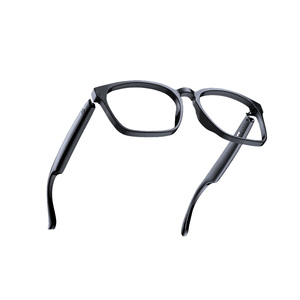
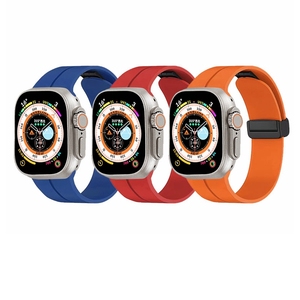
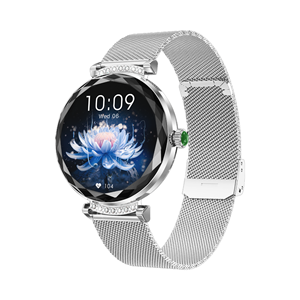
Audio is expanding beyond dedicated earwear into smart frames and optical wearables. AI-enabled audio smart glasses featuring voice assistant triggers, stabilized video/photo recording, real-time multilingual translation, and magnetic fast-charging straps represent the fast-growing frontier of personal electronics. Top China manufacturers now offer unified OEM platforms spanning smartwatches, open-ear audio eyewear, and modular interchangeable smart accessories.
Understanding the operational differences between automated enterprise-grade manufacturing facilities and small-scale assembly suppliers is crucial for risk mitigation and long-term brand equity.
| Evaluation Parameter | Tier-1 Enterprise OEM Manufacturer | Tier-2 Small Assembly Workshop |
|---|---|---|
| Cleanroom Class | Class 10,000 Dust-Free Acoustic Assembly Cleanrooms | Standard Unfiltered Factory Floor |
| SMT Line Automation | 100% Fully Automated Fuji/Yamaha High-Speed SMT | Outsourced Third-Party Low-Cost Board Assembly |
| Acoustic Calibration | APx555 Automated SoundCheck in Anechoic Chambers | Manual Golden Ear / Spot-Check Listening Test |
| Defect Rate (PPM) | < 500 PPM (Field Defect Rate < 0.5%) | > 3,000 PPM (Field Defect Rate > 3.0%) |
| Battery Safety Standards | Sealed OVP/OCP Chipset Protection + UN38.3/MSDS Certified | Generic Battery Cells with Minimal Protection Boards |
| IPX Waterproofing | Nano-Coating + Automated Pressure Leak Testers (IPX5 - IPX8) | Manual Glue Sealing (Unverified Rating) |
Leveraging decades of combined hardware experience, our manufacturing ecosystem provides an end-to-end turnkey solution for international brands. Backed by 50 Million+ global units sold, over 5 Million verified product reviews, and an extraordinary production speed delivering 1 unit every 5 seconds, our infrastructure guarantees scale, precision, and stability.
From initial industrial design (ID) rendering and structural tooling mold development to custom SMT layout, acoustic tuning, firmware optimization, packaging customization, and international certification execution, our facility streamlines product lifecycle management. Our stringent quality control framework enforces a 100% 4-stage testing protocol: Incoming Quality Control (IQC), In-Process Quality Control (IPQC), Final Quality Control (FQC), and Outgoing Quality Control (OQC).
Essential Answers for International B2B Buyers, Brand Owners, and Sourcing Managers
For ready-to-ship standard white-label models with custom logo laser engraving and customized packaging, MOQs start as low as 500 to 1,000 units per model. For complete custom tooling, unique structural ID mold design, specialized chipset integration, or custom color matching (Pantone), the standard production MOQ is typically 3,000 to 5,000 units per batch.
Reputable OEM manufacturers assist clients by providing existing QDID (Qualified Design ID) declarations under Bluetooth SIG rules, saving buyers tens of thousands of dollars in listing fees. Furthermore, all products undergo rigorous testing to obtain full CE, FCC, RoHS, REACH, KC, PSE, and TELEC certifications required for smooth customs clearance and market entry across North America, Europe, Japan, and the Middle East.
Tier-1 factories exclusively source lithium-ion polymer batteries from certified manufacturers equipped with built-in Seiko protection ICs (over-charge, over-discharge, short-circuit protection). Batteries undergo thermal shock, drop impact, needle puncture testing, and carry full MSDS, UN38.3, and IEC62133 air/sea transport safety documentation.
Standard OEM samples with custom artwork branding can be prepared and dispatched within 3 to 7 working days. Functional 3D prototypes or pre-production acoustic samples take approximately 10 to 14 days. Full mass production lead time typically ranges from 25 to 35 calendar days following artwork confirmation and deposit receipt.
Every single TWS unit equipped with ANC undergoes automated microphone sensitivity and noise reduction calibration on automated SoundCheck test benches during the assembly line stage. Any earbud deviating by more than ±1.5dB from the master target curve is automatically flagged and rejected by automated robotics.
Elevate your product line with customized OEM/ODM true wireless audio, AI smart glasses, and smart wearables. Contact our senior engineering team today for technical specs, factory audit reports, and instant wholesale quotations.
