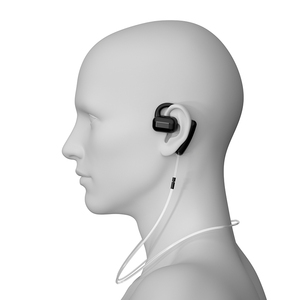
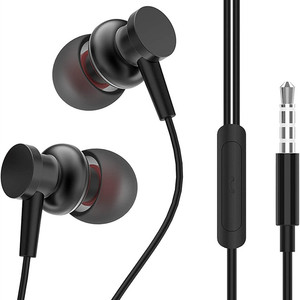
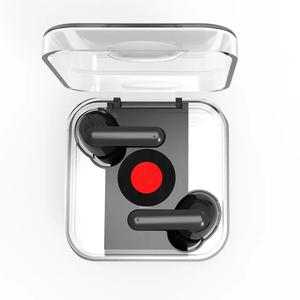
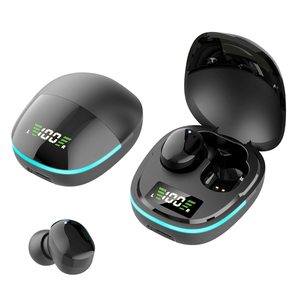
The global true wireless stereo (TWS) and active noise canceling (ANC) headphone market has entered a mature phase characterized by rapid technical convergence, cost compression, and relentless acoustic engineering innovation. As international brand owners, hardware startup founders, consumer electronics distributors, and enterprise procurement managers navigate the global supply chain, China remains the uncontested epicenter for advanced electro-acoustic manufacturing, firmware optimization, and high-density surface mount technology (SMT).
This comprehensive industry whitepaper provides enterprise buyers with an analytical framework for identifying, vetting, and partnering with China's premier noise-canceling earbud manufacturers and exporters. Grounded in empirical manufacturing data, acoustic laboratory measurements, and supply chain telemetry, this report dissects the architectural shifts in noise reduction DSPs, evaluates OEM vs. ODM manufacturing operational workflows, and highlights key cost-reduction strategies for bulk sourcing without sacrificing acoustic compliance or long-term product reliability.
Acoustic Engineering Precision
Multi-feedforward and feedback MEMS mic arrays tuned to isolate ambient environmental sound profiles from 20Hz to 4kHz.
Low-Power BT 5.4 / 6.0
Integration of low-energy audio codecs (LC3), sub-30ms gaming latency, and multi-point device handover capability.
Rigorous QA Standards
100% automated SoundCheck testing, IPX7/IPX8 water immersion validation, and thermal shock chamber stress testing.
Modern noise canceling earbuds rely on complex electro-acoustic feedback loops and digital signal processors (DSPs) to counteract incoming wave phases. When specifying production parameters during the Request for Quotation (RFQ) phase, procurement teams must evaluate the core noise cancellation topologies offered by Chinese OEM/ODM facilities:
A. ANC Architecture Comparison
Feedforward ANC: Utilizes an externally positioned microphone (on the outer shell) to capture ambient sound before it reaches the human ear canal. The DSP synthesizes an inverted anti-noise wave. Ideal for predictable, mid-frequency attenuation (-15dB to -25dB), but susceptible to wind noise interference.
Feedback ANC: Employs an internal microphone positioned inside the ear nozzle, monitoring the actual acoustic signal reaching the eardrum. It self-corrects the output in real-time, excelling at low-frequency cancellation (50Hz - 500Hz), though vulnerable to high-frequency acoustic feedback screeching if ear tips lose isolation.
Hybrid Active Noise Cancellation: Combines both Feedforward and Feedback MEMS microphones on each earbud channel. Utilizing advanced dual-core DSPs (such as Qualcomm QCC5171, Bestechnic BES2600, or Airoha AB1565), Hybrid ANC achieves peak cancellation depths exceeding -45dB to -48dB across broad bandwidths (20Hz - 2.5kHz), while incorporating dynamic transparency mode algorithms.
B. AI-Powered Environmental Noise Cancellation (ENC) for Telephony
Voice call clarity remains a primary driver of end-user retention. Premier Chinese exporters integrate Deep Neural Network (DNN) voice extraction algorithms trained on hundreds of thousands of environmental sound datasets. Utilizing multi-microphone beamforming arrays, the system isolates human speech formant frequencies while filtering out wind shear, traffic hum, and office babble by up to 35dB, ensuring crystal-clear uplink audio across corporate communications platforms.
Chipset Platform
ANC Type Supported
Max Attenuation
BT Standard
Target Product Segment
Qualcomm QCC5171 / 3071
Adaptive Hybrid ANC
-45dB to -48dB
Bluetooth 5.3 / LE Audio
Tier-1 Flagship / Audiophile Enterprise
Bestechnic (BES) 2600 Series
Dual-Mic Hybrid ANC
-38dB to -42dB
Bluetooth 5.3 / 5.4
Mid-to-High Retail & Brand OEMs
Airoha AB1565 / AB1568
Feedforward / Hybrid
-35dB to -40dB
Bluetooth 5.3
High-Volume Consumer & Sports Lineup
Realtek RTL8773B
Software Feedforward ANC
-25dB to -30dB
Bluetooth 5.2
Value-Driven Promotional Electronics
3. Industrial Clusters & Manufacturing Ecosystem in China
Evaluating China's manufacturing landscape requires understanding geographic specialization. China's acoustic hardware ecosystem is heavily clustered in Guangdong Province (Shenzhen, Dongguan, Huizhou) and Eastern coastal hubs (Ningbo, Suzhou):
Shenzhen (Bao'an & Longgang Districts): The world's epicentre for rapid prototyping, PCBA micro-soldering, Bluetooth firmware customized flashing, and fast-turnaround tool injection molding. Ideal for brands requiring cutting-edge features like touch-screen charging cases, hybrid transparent housings, or specialized gaming low-latency protocols.
Dongguan (Chang'an & Tangxia Towns): The heavy industrial backbone for mass electro-acoustic assembly. Dongguan houses massive automated factory parks specializing in diaphragm stamping (titanium dome, DLC diamond-like carbon, composite bio-cellulose drivers), precision liquid silicone rubber (LSR) ear tip molding, and high-volume packaging lines.
Ningbo & Eastern China Hubs: Renowned for micro-speaker driver voice coil manufacturing, high-density neodymium magnet processing, and budget-to-mid tier wired and basic TWS exporter operations.
Turnkey OEM/ODM Production Lifecycle Workflow
Partnering with an established manufacturer involves a strict multi-gate quality assurance process to guarantee production consistency across batch orders of 10,000 to 1,000,000+ units:
Industrial Design (ID) & Mechanical Engineering (ME): 3D CAD modeling, acoustic cavity volume simulation (VASP), antenna placement modeling to prevent Bluetooth signal dropouts.
Tooling & Rapid Prototyping: CNC metal master samples, SLA 3D printed fit checks, and multi-cavity hardened steel injection molds (rated for 500,000 shots).
EVT / DVT / PVT Testing Gates: Engineering Validation Test (EVT) for board bring-up; Design Validation Test (DVT) for drop, water resistance, and acoustic frequency curves; Production Validation Test (PVT) to calibrate line assembly speed and yield metrics.
Mass Production & SoundCheck Calibration: Automated SMT component mounting, automated optical inspection (AOI), 100% acoustic sweep analysis in anechoic test chambers via Head and Torso Simulators (HATS).
4. Key Product & Procurement Trends (2025-2030)
To ensure portfolio competitiveness over a 24-to-36 month retail lifecycle, sourcing executives must align prospective product specifications with emerging technological shifts in wireless personal audio:
Open-Ear Wearables (OWS & Air Clips)
Transition toward non-intrusive directional audio. Open Wearable Stereo (OWS) and air-clip earbud form factors allow situational awareness while using algorithmic sound-beam focus to prevent audio leakage.
Smart Touch-Screen Cases
Charging cases featuring integrated full-color AMOLED touch panels running micro-RTOS. Enables localized equalizer control, active call rejection, loss-prevention tracking, and ANC mode switching without opening smartphone apps.
Biometric Sensor Integration
Merging audio equipment with health monitoring. Photoplethysmography (PPG) heart-rate sensors and spatial tracking gyroscopes embedded directly into the earbud nozzle for real-time fitness telemetry and 3D spatial audio playback.
5. Enterprise OEM/ODM Manufacturing Strengths
When selecting an acoustic exporting partner, operational scale and verifiable quality assurance infrastructures are critical. Our manufacturing network offers key competitive advantages designed for high-volume brand owners, regional importers, and retail channel partners:
Proven Scale with over 50 Million Units Shipped: Our production lines have manufactured and exported tens of millions of wearable audio products and smart devices worldwide, operating under ISO9001 and ISO14001 certified environmental quality systems.
5 Million+ Consumer Reviews Analytics Loop: Product iterations are driven by real-world end-user feedback across major global retail marketplaces, allowing us to proactively resolve common failure points (e.g., ear wax mesh blockage, hinge stress fractures, charging pin oxidation).
Comprehensive International Compliance & Certification: Full support for international regulatory submissions including CE, FCC, RoHS, REACH, BQB Bluetooth SIG licensing, TELEC (Japan), KC (Korea), and UN38.3 lithium battery transport compliance.
End-to-End Eco-System Support: Beyond earbuds, our technical architecture spans smartwatches (AMOLED and Bluetooth calling), audio smart glasses, and specialized interchangeable accessories, allowing cohesive brand ecosystems under unified companion apps.
What are the typical Minimum Order Quantities (MOQs) for OEM/ODM earbud production?
For standard catalog products with custom logo printing and customized packaging, MOQs generally start at 1,000 units per colorway. For complete ODM projects requiring custom housing tooling, unique PCBA layouts, or customized Bluetooth pair names, standard production MOQs are typically 3,000 to 5,000 units.
How do you ensure stable ANC performance across mass production batches?
Every single earbud unit passes through an automated acoustic test station (SoundCheck or Audio Precision analyzer) within an anechoic box during final assembly. Gain offset calibration values are written directly to the chipset's EEPROM/Flash memory to compensate for slight hardware tolerance variations in microphones and dynamic drivers, maintaining uniform noise cancellation curves within +/- 1.5dB of master gold samples.
What is the difference between active noise cancellation (ANC) and environmental noise cancellation (ENC)?
ANC works for the earbud wearer by utilizing outward and inward microphones to cancel ambient surrounding noise entering the listener's ear. ENC works for the person on the other end of a phone call by using microphone beamforming algorithms to filter out ambient background noise from your spoken voice.
What lead times should buyers expect for bulk export orders?
Sample production and quick-turn customized samples take 5 to 7 working days. Repeat OEM orders take approximately 25 to 30 days after packaging proof approval. Initial ODM runs requiring new plastic injection tooling take approximately 45 to 60 days from CAD freeze to final PVT release.
How are lithium batteries certified for international air and sea shipments?
All earbud batteries and charging case battery cells undergo rigorous safety testing, providing full UN38.3 test reports, Material Safety Data Sheets (MSDS), and 1.2m drop test documentation. Products are shipped in compliant anti-static packaging following IATA/IMDG dangerous goods regulations.
Ready to Scale Your Wireless Audio Lineup?
Connect with our technical engineering team for instant B2B quotations, sample evaluations, full BOM pricing breakdowns, and comprehensive OEM/ODM factory audit documentation.