Directly source market-proven square smartwatches, Bluetooth calling wearables, and modular smart accessories engineered for high-volume global distribution.


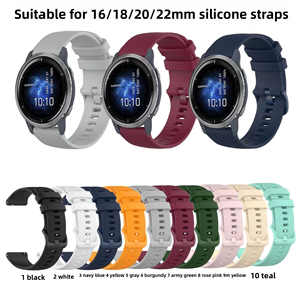
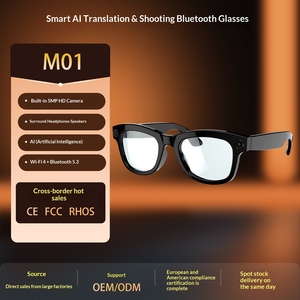

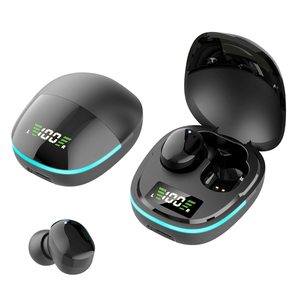
Why global B2B buyers and brand owners are shifting purchasing volumes toward square-form factor smart wearables.
The global wearable device market has experienced a decisive structural shift over the last three years. While round-dial timepieces retain heritage appeal for traditional fashion segments, square smartwatches have claimed over 62% of functional wearable procurement volume worldwide. The engineering justification is straightforward: a square display matrix provides approximately 28% more visible screen real estate than a round screen of identical diagonal width. This additional display area is crucial for rendering complex text notifications, multi-metric biometric dashboards, app menus, and interactive widgets without truncating critical user data.
For international brand importers, wholesalers, and corporate procurement directors, selecting the right square smart watch factory and supplier is no longer merely a matter of unit price negotiation. It requires a rigorous technical evaluation of a manufacturing partner's SMT (Surface Mount Technology) assembly precision, custom Real-Time Operating System (RTOS) firmware stability, optical sensor calibration capabilities, and international regulatory compliance (CE, FCC, RoHS, KC, and REACH).
This industry whitepaper provides an exhaustive technical benchmark to assist enterprise sourcing teams in identifying, auditing, and contracting top-tier smart watch original equipment manufacturers (OEM) and original design manufacturers (ODM).
Key technical operational benchmarks used to grade tier-1 wearable original equipment manufacturers.
Tier-1 factories utilize High-Speed Yamaha or Fuji SMT placement machines capable of handling 0201 component sizes with high placement accuracy, ensuring robust mainboard stability and high yield rates.
Evaluation of Full Lamination (OCA/LOCA) vs. Frame Air Bonding on AMOLED and HD IPS square screens. Full lamination guarantees superior sunlight readability and IP68 water resistance.
Validation of optical heart rate and SpO2 sensor integration. Advanced suppliers employ multi-channel photodiode arrays coupled with skin-tone adaptive algorithms for precise PPG tracking.
Factory-level automated pressure testing for IP67, IP68, and 5ATM ratings. Precision dispenser glue sealing combined with custom silicone gaskets prevent moisture ingress during thermal cycling.
In-house RTOS development capability. Top suppliers provide white-label companion mobile applications (iOS/Android), UI customization tools, and API integration for third-party health cloud platforms.
Implementation of 100% automated battery aging cabinets, multi-stage charge-discharge cycle validation, and integrated Seiko/Protection IC modules to eliminate battery swelling risks.
A comparative engineering breakdown of technical specifications available across square smartwatch suppliers.
| Engineering Specification | Tier-3 Basic Factory | Tier-2 Standard OEM | Tier-1 Premium ODM (Fire-Boltt Benchmark) |
|---|---|---|---|
| Display Tech | 1.44" - 1.69" TFT LCD (Air Bonding) | 1.83" - 2.01" HD IPS Screen | 2.02" AMOLED (Always-On, 600+ Nits, OCA Full Lamination) |
| Main Processor (MCU) | 8-bit Single-Core Low-Cost MCU | JL / Realtek Dual-Mode BT Chipset | High-Performance Realtek / Actions Dual-Core BLE 5.3 + DSP |
| Casing Material | ABS Plastic Injection Molding | Zinc Alloy Vacuum Plating | CNC Machined Zinc-Aluminum Alloy + IML Back Shell |
| Waterproof Testing | Basic Air Dip Inspection | 100% IP67 Air Pressure Test | Automated Vacuum Water Immersion + 5ATM Hydrostatic Chamber |
| App Ecosystem | Generic Third-Party App | Semi-Custom White-Label App | Fully Custom Dedicated iOS/Android App + Open SDK / API |
| Defect Rate (RMA) | > 3.0% Average | 1.0% - 1.5% Average | < 0.3% Strict Six-Sigma Standard |
Anticipating technological shifts in square wearable production to maximize product lifecycle profitability.
As the smart wearable landscape matures, enterprise buyers must align their product roadmaps with key emerging technological trends. Factories that fail to invest in these advanced manufacturing methodologies will become obsolete over the next procurement cycle.
Future square smartwatches are rapidly transitioning from cloud-dependent processing to edge-AI integrated microcontrollers. Integrated Micro-NPUs (Neural Processing Units) enable instant on-device voice recognition, offline noise reduction during Bluetooth calls, and predictive biometric anomaly detection without draining battery power or relying on active mobile network connections.
Next-generation optical array modules integrated into square back-cases utilize multi-wavelength LED emitters (Green, Red, Near-Infrared, and Infrared). Factories are currently testing commercialized non-invasive continuous glucose trend monitoring, blood-viscosity estimation, and multi-lead ECG sensing embedded directly into zinc-alloy and ceramic wearable housings.
While traditional LCD screens remain relevant for budget-focused consumer lines, high-margin retail distribution is shifting decisively to LTPO (Low-Temperature Polycrystalline Oxide) AMOLED square panels. LTPO technology allows dynamic refresh rates to scale down to 1Hz during Always-On Display mode, reducing screen power consumption by up to 40% compared to standard AMOLED modules.
Global regulatory bodies—most notably the European Union—are implementing stricter ESG and eco-design mandates for electronics. Top square smartwatch suppliers are re-engineering hardware structures to facilitate easy disassembly for battery recycling, adopting 100% post-consumer recycled (PCR) aluminum alloys, and eliminating halogenated flame retardants from PCB sub-assemblies.
How industry leaders manage quality assurance across millions of manufactured square smartwatch units.
Building a successful global consumer technology brand requires an unwavering supply chain foundation. Sourcing square smartwatches from an unverified manufacturer frequently leads to severe operational risks: uncalibrated health sensors damaging brand reputation, high RMA return rates eroding profit margins, and uncertified batteries causing customs impoundment.
Our manufacturing partner model resolves these systemic bottlenecks through a rigorous, end-to-end Quality Assurance (QA) framework executed at every stage of the production pipeline:
100% component inspection of incoming ICs, AMOLED display glass, lithium-ion battery cells, and housing shells. Spectrophotometers verify color accuracy, while X-ray fluorescence devices check RoHS compliance.
Real-time optical alignment checks during SMT assembly, automated glue dispenser dispensing monitoring, and RF transmission power calibration (TRP/TIS testing inside anechoic chambers).
Finished goods undergo rigorous drop testing (1.2m concrete impact), thermal shock cycles (-20°C to +60°C), artificial sweat corrosion immersion, and 96-hour continuous salt spray tests.
Access our production lines, custom RTOS software engineering, and international compliance documentation tailored for your brand.
Direct technical and operational answers to common questions asked by international buyers and procurement officers.
For standard white-label orders utilizing existing tooling and standard colorways, the starting MOQ is typically 1,000 units per color. For fully customized OEM orders requiring custom casing colors, silk-screened logos, customized gift box packaging, and pre-installed custom firmware boot screens, the standard minimum order volume is 3,000 to 5,000 units. Completely new ID/MD custom tooling projects start at 10,000 units minimum.
AMOLED (Active Matrix Organic Light Emitting Diode) panels control each pixel individually. This allows true pixel-level shutoff for infinite contrast ratios, deep true blacks, lower battery drain when rendering black backgrounds, and native support for Always-On Display (AOD). HD IPS screens utilize a single continuous LED backlight; while highly cost-effective and bright, they consume constant power when active and cannot offer true Always-On Display functionality without substantial battery drain.
Professional ODM factories maintain dedicated in-house software engineering teams. Firmware localization supports over 30+ international languages (including right-to-left scripts like Arabic and Hebrew). For mobile apps, suppliers provide white-label SDKs allowing enterprise buyers to rebrand existing iOS and Android application codebases, customize server cloud hosting regions (AWS/Google Cloud compliance), and integrate localized payment or health ecosystem APIs.
For entry into the European Union, products must carry CE (RED directive), RoHS 2.0, and REACH chemical safety compliance certifications. For the United States market, FCC ID certification for Bluetooth radio frequency spectrum usage is legally required, alongside UL/IEC 62133 battery safety reports. Additional regional marks include Telec/MIC for Japan, KC for South Korea, and Anatel for Brazil.
Once prototype samples and packaging pre-production proofs are signed off: standard mass production lead time is 30 to 35 calendar days for initial orders. Repeat orders using identical software and hardware specifications can be produced within 20 to 25 calendar days. Tooling creation for unique custom hardware designs requires an additional 35 to 45 days prior to pilot sample runs.
Tier-1 factories offer a 12-month to 14-month manufacturer warranty against hardware functional defects. Standard B2B contracts typically provide 0.5% to 1.0% free spare units (FOC) shipped alongside the main batch to cover localized customer replacements, or provide direct credit offsets against future orders for documented factory defect rates exceeding agreed SLA thresholds.
Connect directly with our engineering and procurement team to request full product catalogs, technical spec sheets, and volume price breaks.
