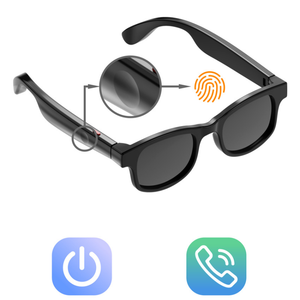
Top 10 OEM Smart Watch Manufacturers & Factories

2026 Strategic B2B Sourcing Guide: Evaluation Metrics, Production Benchmarks & Smart Wearable Supply Chain Insights

Featured OEM/ODM Wearable Solutions

Explore our market-validated, high-performance OEM/ODM products engineered for global consumer technology brands.
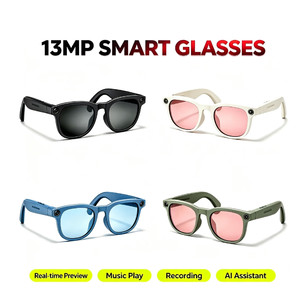
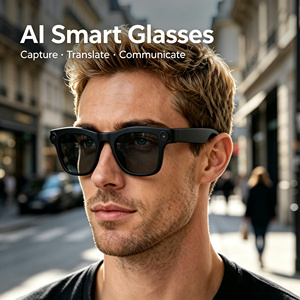
AI Smart Glasses 1300W HD Camera WiFi ChatGPT Translation
AI Smart Glasses 1300W HD Camera WIFI ChatGPT Gesture Control
13MP HD Camera ChatGPT AI Gesture Control
Contact Us
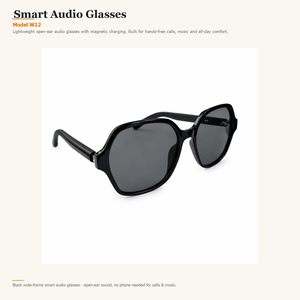
Open Ear Bluetooth Audio Sunglasses Wireless Headphones
Open Ear Bluetooth Audio Sunglasses Wireless Music Stereo Glasses
Open-Ear Audio UV400 Lens BT 5.4 Calling
Contact Us
Polarized Sunglasses GS05 Anti-Blue Light AI Smart Glasses
Polarized Sunglasses GS05 AI Real-Time Translation Smart Glasses
AI Translation Anti-Blue Light Voice Assistant
Contact Us
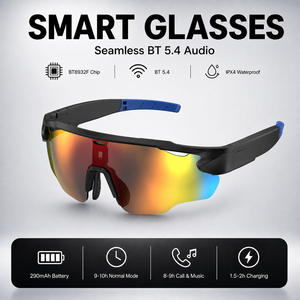
IPX4 Waterproof BT 5.4 Audio Smart Glasses 290mAh Battery
IPX4 Waterproof BT 5.4 Audio 290mAh Battery Outdoor Smart Glasses
9 Hours Talk IPX4 Waterproof Fast Charge
Contact Us
AI Smart Glasses Object Recognition Dual Speakers
AI Smart Glasses Dual Speakers Object Recognition Bluetooth Eyewear
13mm Speakers AI Vision Hands-Free Call
Contact Us
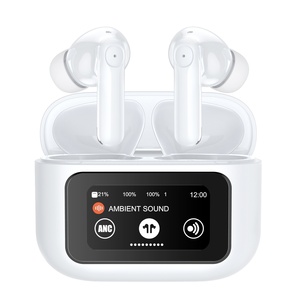
Earbuds Full Color Screen Touch ANC TWS AI Translation
Full Color Screen Touch ANC TWS Earbuds Customizable AI Translation
Touch Screen ANC Active Noise AI Translation
Contact Us
Smart Glasses E13 F1 Touch Voice Control Music Calling
Smart Glasses E13 F1 Touch Voice Control Super Toughness PC Eyewear
Tough PC Frame Touch Control HD Audio
Contact Us
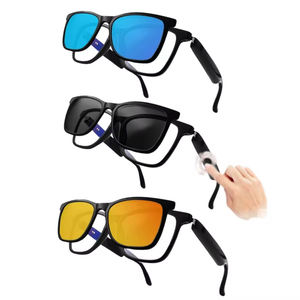
Smart Glasses Audio Sunglasses Dual Magnetic Charging Polarized
Audio Sunglasses Dual Magnetic Charging Polarized Lens Open Ear
Magnetic Charge Polarized Lens Sports Outdoor
Contact Us

Validated Scale & OEM Manufacturing Excellence

Behind every top-tier consumer technology brand is a world-class manufacturing infrastructure built for precision, scale, and operational agility.

50M+
Global Units Shipped
5M+
Verified End-User Reviews
1 / 5s
Production Output Velocity
99.4%
First-Pass Yield Rate (FPY)
Turnkey ODM & OEM Integration
From ID design, mechanical engineering, tooling development, and PCBA SMT layout to customized Android/RTOS firmware buildouts and iOS/Android app white-labeling.
Strict Automotive-Grade QC
Equipped with 100% automated optical inspection (AOI), IP67/IP68 water immersion chambers, salt spray corrosion testing, and thermal shock chambers to ensure zero-defect delivery.
Global Regulatory Compliance
Fully certified with CE, FCC, RoHS, REACH, TELEC, and Anatel standard certifications, streamlining market entry across North America, Europe, Asia, and Latin America.

The 2026 Definitive Rankings: Top 10 OEM Smart Watch Manufacturers & Factories

The global wearable device industry is currently experiencing a structural shift. As smartwatches evolve from basic step-trackers into sophisticated health diagnostic hubs and AI-powered edge compute devices, choosing the right original equipment manufacturer (OEM) or original design manufacturer (ODM) has become a paramount strategic decision for tech brands, telecom operators, and corporate buyers worldwide.

This whitepaper report provides an objective, data-driven analysis of the world's leading smart watch manufacturing hubs. Suppliers have been evaluated based on engineering R&D capability, factory automation level, daily SMT capacity, supply chain resilience, software customization depth (RTOS & Wear OS), and international compliance standards.

Rank #1 Frittstech / Fire-Boltt OEM Supply Hub
Global Leader in AMOLED & Calling Wearables

Frittstech operates as a premier high-volume OEM/ODM manufacturing engine powering top-tier wearable consumer brands globally. Specializing in high-density SMT placement, AMOLED micro-display optical bonding, and advanced multi-wavelength PPG health sensors, the facility handles over 50 million units in validated production runs. Its proprietary RTOS software suite allows seamless integration with localized third-party voice AI systems and comprehensive cloud-health infrastructure.

Core StrengthsUltra-low power AMOLED, Dual-DSP BT Calling, AI Smart Glasses
Factory Capacity3.5 Million Units / Month
CertificationsISO9001, ISO14001, CE, FCC, RoHS, IP68 Waterproof
Rank #2 Foxconn Industrial Internet (FII) - Wearables Div.
Precision Electronics & Tier-1 Contract Manufacturing

Foxconn remains an industrial titan in micro-electronics assembly. Its wearable manufacturing lines feature fully automated robotic assembly arms, sub-micron CNC metal casing machining, and proprietary battery encapsulation technologies. Ideal for ultra-large enterprise brands requiring stringent military-grade testing and massive monthly throughput.

Core StrengthsTitanium machining, eSIM integrated modules, High-volume automated assembly
Factory Capacity10+ Million Units / Month
CertificationsISO9001, IATF16949, CE, FCC, UL
Rank #3 Luxshare Precision Industry
Advanced Acoustic & Optical Wearable Integration

Luxshare Precision has emerged as a cornerstone supplier for premium acoustic and smart wearable products. Renowned for SiP (System-in-Package) micro-miniaturization engineering, Luxshare excels at integrating high-performance microphone arrays, open-ear acoustic waveguides, and sophisticated wireless charging coils inside dynamic, lightweight smartwatch housings.

Core StrengthsSiP Packaging, Acoustic tuning, Wireless charging coils
Factory Capacity5 Million Units / Month
CertificationsISO9001, ISO14001, Apple MFi Certified
Rank #4 Goertek Smart Wearable Solutions
Acoustics, Smart Eyewear & Micro-Display OEM

Goertek leads the convergence of audio, optics, and wearable smart devices. Recognized globally for its MEMS microphone components and optical waveguide R&D, Goertek's smart watch and AI smart glasses assembly lines provide unmatched fidelity in voice processing, ANC noise reduction, and AR micro-projection optics.

Core StrengthsMEMS Microphones, Open-ear audio optics, Waterproof acoustic mesh
Factory Capacity4 Million Units / Month
CertificationsISO9001, ISO27001, CE, FCC
Rank #5 Compal Electronics Smart Device Division
Enterprise ODM & Wear OS Platform Engineering

Compal Electronics provides full-stack ODM capabilities focusing heavily on high-tier smartwatches powered by complex operating systems like Wear OS and full Android. Their engineering teams excel at thermal management, high-frequency cellular RF antenna layout (4G LTE / 5G sub-6GHz), and ruggedized outdoor smartwatch design.

Core Strengths4G/5G SIM Smartwatches, Wear OS custom builds, Multi-GNSS Antenna RF design
Factory Capacity2.5 Million Units / Month
CertificationsISO9001, ISO13485 (Medical Devices), CE
Rank #6 Shenzhen Wearfit Technology Co., Ltd.
Turnkey Commercial Wearable Ecosystem Sourcing

Wearfit Technology is a fast-growing OEM powerhouse in Shenzhen's High-Tech Industrial Park. Known for rapid prototyping and agile manufacturing cycles, Wearfit offers turnkey solutions for mid-to-high end fitness smartwatches featuring high-refresh AMOLED screens, blood pressure estimation algorithms, and modular strap quick-release systems.

Core StrengthsRapid turnaround, High-brightness AMOLED, Custom SDK packages
Factory Capacity1.8 Million Units / Month
CertificationsISO9001, CE, RoHS, FCC
Rank #7 Wingtech Technology
Semiconductor Integration & IoT Smart Manufacturing

As an integrated semiconductor packaging and ODM giant, Wingtech leverages its in-house chip supply chain advantages to manufacture smart wearables with optimized bill-of-materials (BOM) costs. They are key innovators in dual-chip architecture (MCU for daily battery efficiency + GPU for fluid 60fps UI rendering).

Core StrengthsBOM Cost optimization, Semiconductor packaging, Dual-chip platforms
Factory Capacity3 Million Units / Month
CertificationsISO9001, ISO14001, QC080000
Rank #8 Shenzhen Somic Smart Wear Co., Ltd.
Specialized Outdoor & Tactical Smartwatch Factory

Somic Smart Wear specializes in ultra-rugged outdoor, sports, and tactical smartwatches. Utilizing high-impact polycarbonate frames, stainless steel bezels, and 5ATM/10ATM deep dive pressure sealing, Somic is the go-to OEM partner for outdoor gear brands targeting extreme sport enthusiasts.

Core Strengths5ATM/10ATM Water Resistance, Shockproof casings, Multi-sport tracking
Factory Capacity1.2 Million Units / Month
CertificationsISO9001, IP69K, MIL-STD-810G military standard
Rank #9 Mobvoi Supply Chain Manufacturing
AI Voice Engine & Algorithmic Wearable Assembly

Combining proprietary AI voice recognition algorithms with hardware production, Mobvoi Supply Chain offers custom OEM services with embedded edge-AI features. Their production lines excel at micro-speaker integration and low-latency voice command processing units.

Core StrengthsOn-device AI speech processing, Dual-layer display bonding
Factory Capacity1 Million Units / Month
CertificationsISO9001, CE, FCC
Rank #10 Shenzhen Zeblaze Electronics Co., Ltd.
Cost-Effective Fashion & Lifestyle Smartwatches

Zeblaze Electronics has earned a global reputation for producing highly cost-effective, fashion-forward smartwatches tailored for fashion brands and regional ecommerce retailers. Their manufacturing ecosystem offers low MOQs, rapid customization of physical watch straps, and turn-key branded packaging options.

Core StrengthsFlexible low MOQs, Trendy mechanical designs, Quick lead times
Factory Capacity800,000 Units / Month
CertificationsISO9001, CE, RoHS

Technology Roadmap: Key Hardware & Software Trends in Smart Wearables (2026–2030)

Procurement teams and product managers must align their product roadmaps with incoming technology inflections. Over the next three to five years, the smartwatch and smart audio market will be defined by five pivotal technical developments:

1. Dual-Core & Hybrid Chip Architectures

Traditional smartwatches suffered from a binary trade-off: either full functionality with 1-day battery life (e.g., high-power OS) or 14-day battery life with limited app capabilities (basic RTOS). Next-generation OEM platforms utilize hybrid dual-chip architectures (such as Realtek + Apollo microcontrollers or Snapdragon Wear dual-die chips). An ultra-low power MCU handles background health tracking and Always-On Display tasks, while a high-performance application processor kicks in only during voice calls, AI calculations, or 3D UI animations—extending full-feature battery performance to 7–10 days.

2. Micro-AMOLED and High-Nits Outdoor Readability

Display technology is shifting decisively away from legacy TFT-LCD screens toward high-resolution AMOLED and Micro-AMOLED display panels. Delivering over 1,000 to 1,500 nits of peak brightness, these screens allow crystal-clear outdoor sunlight visibility while reducing power draw during static Always-On Display (AOD) modes due to self-emitting black pixels.

3. Edge AI and Generative LLM Integration

Smartwatches and smart audio glasses are evolving into active AI assistants rather than passive notification receivers. Modern OEM firmware allows direct Bluetooth pass-through or standalone eSIM query routing to cloud LLMs (such as ChatGPT, Google Gemini, or proprietary brand engines). Users can execute voice translation, receive real-time contextual travel guidance, and synthesize meeting notes directly from wrist microphones or smart audio frames.

4. Non-Invasive Advanced Health Sensing (PPG + ECG Multi-Array)

Biometric sensor technology is undergoing rapid evolution. Leading OEM factories are replacing single-LED optical PPG units with 4-channel and 8-channel multi-wavelength sensor arrays combining green, red, and infrared light. Combined with machine-learning algorithm suites, modern smartwatches deliver continuous SpO2 monitoring, single-lead ECG recording, nocturnal sleep apnea detection, stress tracking via heart rate variability (HRV), and non-invasive blood pressure trend estimations.

5. Form Factor Convergence: Smart Glasses & Open-Wearable Stereo (OWS)

The boundaries between smartwatches, earwear, and eyewear are blurring. Open-Ear Wearable Stereo (OWS) and audio smart glasses have established themselves as high-margin growth categories. By integrating directional acoustic sound conduits, polarized UV lenses, AI translation software, and 13-hour battery capacity into lightweight frames, OEM manufacturers are creating brand-new revenue lines for traditional electronics brands.

Global Sourcing Strategy: Procurement Trends for B2B Buyers

The global smartwatch supply chain is undergoing profound structural shifts driven by geopolitical diversification, sustainability mandates, and software monetization models. Purchasing directors must navigate these key procurement trends:

1. Modular SDK & White-Label Apps
Hardware commoditization means brands differentiate through companion apps. Top OEMs now provide full iOS/Android white-label source code, customizable UI widgets, and GDPR-compliant cloud database infrastructure ready for brand deployment.
2. Eco-Friendly & Sustainable Materials
Global buyers increasingly require post-consumer recycled (PCR) plastics for casings, ocean-bound plastic straps, ocean-freight minimized packaging, and full compliance with EU Battery Directive 2026 mandates.
3. Agility & Low-MOQ Tiered Scaling
To minimize inventory liability, buyers favor OEM factories offering flexible tiered ordering—starting with 1,000 units for market testing using standard tooling, scaling to 50,000+ units for full custom molding.

Frequently Asked Questions (B2B Sourcing FAQ)

Essential answers to critical operational, engineering, and supply chain questions encountered during wearable product procurement.

Q1: What is the primary operational difference between OEM and ODM smart watch manufacturing?
OEM (Original Equipment Manufacturer) production means the factory builds devices according to your precise technical designs, engineering drawings, and tooling specifications. ODM (Original Design Manufacturer) means the factory provides pre-engineered hardware platforms, pre-certified PCBAs, and private-label molds that your brand can quickly customize with custom logos, strap colors, tailored packaging, and proprietary firmware branding.
Q2: What are the typical Minimum Order Quantities (MOQ) for custom smartwatch manufacturing?
MOQs vary based on customization depth:
  • Standard Private Labeling (Logo & Packaging): 500 to 1,000 units per colorway.
  • Custom Firmware / Watch Faces / Customized App: 2,000 to 3,000 units.
  • Full Custom ID / Unique Tooling & Mold Injection: 10,000+ units due to high upfront CNC tooling and die costs.
Q3: How do OEM factories verify water resistance ratings like IP68 or 5ATM?
Rigorous factories utilize two-stage water resistance testing: 100% dry air-pressure leak testing on the SMT line to detect structural seal flaws, followed by statistical sampling underwater pressure immersion tests (submerging units in specialized pressure tanks simulating 1.5m for IP68 or 50m water column pressure for 5ATM ratings).
Q4: What compliance certifications are mandatory when importing smartwatches into Western markets?
For the European Union: CE-RED (Radio Equipment Directive), RoHS (restriction of hazardous substances), REACH, and WEEE compliance. For North America: FCC ID (for Bluetooth/Wi-Fi emissions), UL/cUL battery safety standards (UL 2054 / IEC 62133), and California Proposition 65 chemical compliance for watch straps.
Q5: What is the standard sample prototyping lead time for OEM projects?
Existing sample models with stock tooling can ship within 3–5 working days. Customized firmware or laser-etched samples take approximately 7–12 days. Full custom ODM project prototyping (3D printed housing, custom PCBA spin, functional sample) typically requires 30 to 45 calendar days.
Q6: Can OEM factories integrate our brand's proprietary mobile application?
Yes. Leading wearable factories provide open API documentation, Bluetooth communication protocols (GATT service specs), and software development kits (SDKs) allowing your software team to connect the smart watch directly to your existing Android/iOS health platform. Alternatively, factories offer turnkey white-label app customization.
Q7: How is quality control handled during high-volume production runs?
Reputable factories follow ISO9001 Total Quality Management (TQM) protocols including IQC (Incoming Quality Control on chips/displays/batteries), IPQC (In-Process Quality Control during assembly), 100% AOI optical inspection, 24-hour battery burn-in testing, and FQC/OQC (Final/Outgoing Quality Control) based on AQL 0.65 / 1.5 sampling standards.
Q8: How does display choice (AMOLED vs. HD TFT LCD) impact production cost and battery efficiency?
AMOLED displays increase BOM costs by roughly 25%–40% compared to HD TFT LCD panels, but offer vastly superior contrast, vibrant color saturation, 178° viewing angles, and lower power consumption during dark UI modes. HD LCD panels remain an excellent, cost-effective choice for budget-conscious entry-level lines.
Q9: Are AI features (like ChatGPT translation) executed on the watch hardware or via mobile gateway?
In most smart watch and smart audio eyewear configurations, voice data is captured by dual-beamforming watch microphones, processed through digital noise reduction (DSP), and transmitted via low-energy Bluetooth to the companion mobile application gateway, which queries the Cloud LLM API and routes the response back in sub-second latency.
Q10: How do we initiate an OEM custom inquiry or factory audit?
Simply click the inquiry button below to connect directly with our engineering team. We provide initial DFM (Design for Manufacture) reviews, BOM cost estimates, and virtual or on-site factory audit schedules within 24 business hours.

Ready to Build Your Next Best-Selling Smart Wearable Line?

Partner with a verified manufacturing leader. Get instant access to engineering specs, sample kits, factory audit reports, and competitive volume tier pricing.

Contact Us