Explore our turnkey, mass-production-ready hardware platforms. Engineered for high-end consumer brands, private labels, and enterprise audio distributors worldwide.


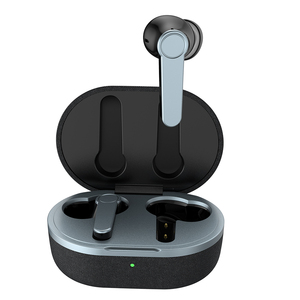
The global True Wireless Stereo (TWS) market has entered an era defined not only by acoustic performance but by industrial design differentiation. Among emerging trends, transparent and semi-transparent TWS earbuds have shifted from niche novelty concepts to mainstream premium audio category drivers. Pioneered by minimalist aesthetic trends and popularised across global retail markets, transparent electronics expose internal componentry, creating an unfiltered visual connection between user experience and micro-electronic engineering.
However, contract manufacturing transparent TWS earbuds introduces rigorous engineering challenges that standard opaque plastic enclosures never encounter. In conventional TWS housing design, internal wiring, glue deposits, component alignment variations, and surface scratches are hidden behind opaque ABS/PC injected shells. In transparent OEM manufacturing, every single element—from the Surface Mount Technology (SMT) printed circuit board layout to the soldering points, micro-ribbon FPCs, magnetic alignment rings, and lithium-ion pouch cells—is completely visible to the end consumer.
Information Gain Insight: Optical-grade transparent TWS engineering requires SPI A-1 high-polish injection molds, cleanroom SMT placement with matte-black or golden immersion PCB substrates, and UV-curable optical adhesives to prevent internal fogging and micro-bubble formation under thermal stress.
As a leading OEM/ODM Transparent TWS Earbuds Manufacturer & Supplier, our industrial facilities overcome these challenges through cleanroom assembly processes, automated optical inspection (AOI), high-precision tooling, and custom acoustic tuning. This comprehensive whitepaper serves as an authoritative guide for B2B procurement directors, brand owners, product managers, and electronics importers seeking to launch market-leading transparent audio platforms.
To maintain a competitive edge in semantic search intent and market positioning, contract buyers must understand the technological shifts shaping the next generation of transparent TWS devices. The convergence of spatial audio, artificial intelligence, low-latency wireless protocols, and sustainable polymers is reshaping procurement specifications across key global markets.
Transitioning from standard PC/PMMA to UV-stabilized Bayer polycarbonate grade 4.5 aging resistance, preventing yellowing and structural embrittlement under outdoor UV exposure.
Next-gen System-on-Chip (SoC) integration delivering sub-20ms ultra-low latency, multi-device Auracast broadcast audio, and 40% lower power consumption for smaller transparent battery cavities.
Visible feedforward and feedback MEMS microphone arrays paired with AI-driven Environmental Noise Cancellation (ENC) algorithms to achieve -45dB deep noise suppression inside transparent housings.
Embedding transparent laser-etched fiber optic traces along the internal circuit frame, producing subtle breathing LED status illumination without direct light bleed into acoustic cavities.
Engineered multilayer SMT substrates utilizing deep black solder masks or immersion gold plating, transforming internal circuit boards into stunning visual art pieces.
Meeting global ESG standards through PCR (Post-Consumer Recycled) optical-grade transparent resins, reducing carbon footprint while passing strict REACH and RoHS compliance testing.
When placing OEM/ODM contract orders, procurement teams can select from standardized reference designs or request customized hardware engineering tailored to target market price points.
| Specification Category | Standard OEM Platform | High-End ODM Customization | B2B Quality Assurance Benchmark |
|---|---|---|---|
| Enclosure Material | High-clarity Bayer 2805 PC | Custom Tinted Acrylic / Scratch-Resistant PMMA | ASTM D1003 Haze < 0.5%, UV Grade 4.5 |
| Bluetooth Chipset (SoC) | Jieli AD6973 / Realtek RTL8753 | Qualcomm QCC3084 / Airoha AB1562AE | BQB Certified, Sub-30ms Low Latency |
| Active Noise Reduction | Dual-Mic ENC (Software DSP) | Hybrid ANC + Triple-Mic ENC (-45dB) | APx555 Acoustic Analyzer Validated |
| Acoustic Speaker Driver | 10mm Composite PET Diaphragm | 13mm DLC (Diamond-Like Carbon) / Titanium Dynamic | THD < 0.5% @ 1kHz, 20Hz-20kHz Range |
| Battery & Playback | 30mAh Earbud / 300mAh Case (24h Total) | 40mAh High-Density / 500mAh Qi-Wireless Case (36h Total) | UN38.3, MSDS, IEC62133 Safety Approved |
| Ingress Protection | IPX4 Splash-Resistant Seal | IPX7 Nano-Coated Waterproof Seal | 100% Automated Air-Tightness Pressure Test |
Sourcing electronic hardware in the audio sector requires an understanding of total cost of ownership (TCO), supply chain stability, tooling cycle times, and regional regulatory compliance. The demand for transparent TWS earphones spans multiple retail segments, including gaming audio brands, lifestyle tech retailers, fashion accessory labels, and premium mobile device distributors.
Modern consumers, particularly Gen Z and millennial demographic segments, seek products that convey technological transparency and authenticity. Opaque plastic shells are increasingly viewed as commoditized. By contrast, a transparent charging case paired with clear earbud stems creates an instantly recognizable identity on retail shelves and social commerce channels.
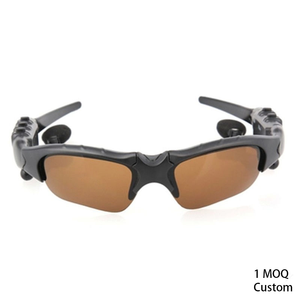
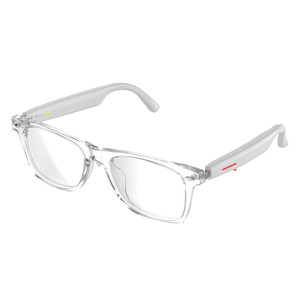
Furthermore, transparent smart audio glasses and open-wearable stereo (OWS) clips are expanding the transparent aesthetic into adjacent categories. Combining UV400 polarized optics with open-ear directional audio transducers allows brands to offer multi-functional wearable ecosystems under a unified design language.
For procurement officers, sourcing clear electronics introduces distinct production risks that require stringent quality assurance agreements with the contract manufacturer:
As a global Tier-1 contract manufacturer of smart wearables, audio devices, and smart glasses, our manufacturing infrastructure is built to support high-volume brand owners with uncompromised quality controls. With tens of millions of units delivered worldwide across major retail partners, our operational capabilities ensure seamless scalability from initial prototype prototyping to mass production.
High-speed Yamaha & Panasonic SMT placement equipment capable of mounting 0201 micro-components with 0.01mm placement accuracy on aesthetic black PCBs.
100% acoustic curve matching using Audio Precision (APx555) analyzers in soundproof isolation chambers, ensuring balanced frequency response and zero channel imbalance.
Complete global testing documentation including CE, FCC, RoHS, REACH, TELEC, KC, BQB Bluetooth licensing, and UN38.3 battery transport safety certification.
Turnkey OEM/ODM Partnership Model: We offer low-MOQ starting thresholds for custom color injection, custom Bluetooth pairing names, custom voice prompts, custom app software integration, and bespoke retail box packaging tailored for high-conversion retail displays.
Direct answers to essential questions asked by enterprise procurement teams, supply chain directors, and private label audio brands.
For standard OEM production runs using existing transparent housing tooling with custom branding (custom logo printing, customized Bluetooth pairing name, and custom packaging), our standard MOQ starts at 1,000 units per color. For fully custom ODM projects requiring dedicated plastic injection mold development, the MOQ starts at 3,000 to 5,000 units depending on the complexity of the acoustic tooling.
We utilize optical-grade Bayer Polycarbonate (PC) blended with anti-UV stabilizing additives rated up to Grade 4.5 on the xenon arc weathering scale. For scratch resistance, we apply a hard UV-cured clear surface coating (1H to 2H pencil hardness standard), protecting the transparent earbuds and charging case from daily friction and pocket scratches.
Yes. In addition to crystal-clear transparent options, we provide custom Pantone-tinted transparent finishes, including Cyber Black, Translucent Blue, Electric Green, Flame Orange, and Purple Tint. Our color matching lab guarantees lot-to-lot consistency using spectrophotometer analysis.
Our transparent TWS architecture supports dynamic drivers ranging from 10mm PET composite diaphragms to 13mm titanium-coated or DLC (Diamond-Like Carbon) high-fidelity dynamic units. For active noise cancellation, we integrate market-proven chipsets from Qualcomm, Airoha, Realtek, and Jieli, offering software-tuned dual-mic ENC or hybrid ANC reaching up to -45dB noise attenuation.
Existing model samples with custom laser-engraved logos or custom silk-screen printing can be shipped within 3 to 5 business days. Pre-production functional golden samples take 7 to 10 days. Upon sample sign-off and deposit confirmation, mass production lead times typically range from 25 to 30 calendar days, inclusive of cleanroom assembly, aging tests, and 100% electroacoustic QA inspection.
We uphold strict intellectual property protection standards for all OEM/ODM client projects. Prior to receiving technical drawings or CAD files, we execute legally binding Non-Disclosure Agreements (NDAs). Custom mold tooling designed for ODM clients remains exclusive to the commissioning buyer with lifetime mold maintenance guarantees.
