Engineered for global wholesale markets. High-yield, certified hardware ready for private-label customization and volume distribution.
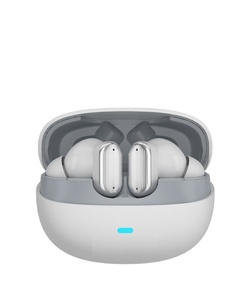
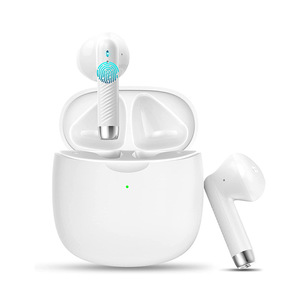

The global True Wireless Stereo (TWS) and wearable smart audio ecosystem is experiencing a fundamental structural shift. Driven by breakthroughs in Bluetooth 5.4/6.0 Ultra-Wideband protocols, edge-AI neural processing units (NPUs), dual-driver acoustic structures, and ergonomic form factors (including Open Wearable Stereo - OWS and Smart Audio Eyewear), enterprise buyers must evaluate custom OEM wholesale TWS earbud suppliers beyond basic unit assembly costs. Sourcing decision-makers now prioritize supply chain agility, deep chipset-level customization, rigorous acoustic validation, and multi-tier quality assurance protocols.
As an industry-leading manufacturing conglomerate operating across personal audio and smart wearable segments—delivering over 50 million units worldwide backed by more than 5 million consumer reviews—our OEM/ODM infrastructure bridges high-density SMT precision assembly with market-validated product design. This technical whitepaper analyzes critical procurement paradigms, micro-architectural hardware advancements, future procurement trends, and engineering methodologies required for B2B procurement directors, brand owners, and global distributors seeking a sustainable competitive edge through OEM supplier partnerships.
Information Gain Insight: Modern OEM TWS procurement is no longer restricted to driver size or casing aesthetic. True competitive advantage relies on latency optimization (<35ms), hybrid Active Noise Cancellation (ANC) depth exceeding -48dB, AI-driven Environmental Noise Cancellation (ENC) dual-microphone beamforming, and battery C-rate management for extended lifecycle performance.
To capture market share in saturated consumer channels, custom private-label brands must understand the underlying hardware innovations transforming personal audio products. Below are the core technical domains driving next-generation ODM development.
Integration of Feedforward and Feedback micro-electromechanical systems (MEMS) microphones paired with low-power DSPs to eliminate broad-frequency noise up to -48dB across 20Hz–2kHz spectrums.
Off-ear directional audio projection utilizing localized acoustic beamforming algorithms, preserving ambient awareness while restricting sound leakage to less than 3% at maximum gain.
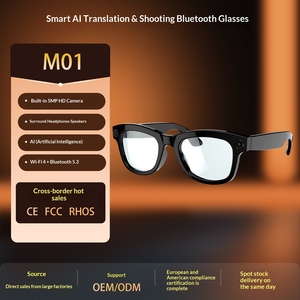
Embedding localized micro-AI chips within audio smart glasses and TWS stems enabling real-time voice translation, hands-free voice assistant integration, and low-power gesture telemetry.
The transition from Bluetooth 5.0 to 5.3, 5.4, and emerging 6.0 standards has rewritten low-power wireless benchmarks. Modern wholesale buyers must verify the exact System-on-Chip (SoC) architecture implemented by their OEM supplier. Leading solution suites—including Qualcomm QCC series, BES (Realtek), and JL high-tier silicon—provide diverse trade-offs regarding power consumption (mA/h), LC3 codec native rendering, and dual-device multipoint connectivity.
High-end gaming and multi-device TWS earbuds utilize dual-mode Bluetooth V5.4 featuring LE Audio (Low Energy Audio) integration. This enables Auracast broadcast capability, allowing a single transmitter to stream synchronized audio to unlimited receivers—a key selling point for commercial, educational, and public venue procurement orders.
Acoustic performance is intrinsically tethered to transducer design and enclosure volume calculation. Dynamic drivers (ranging from 6mm micro-drivers up to 14.2mm titanium-coated composite diaphragm units) deliver low-frequency resonance and punchy bass reproduction essential for consumer sport profiles. Conversely, hybrid configurations combining dynamic bass drivers with balanced armature (BA) tweeters deliver studio-grade audio fidelity demanded by audiophile brand lines.
| Driver Technology | Frequency Range | Power Consumption | Ideal Application / Target Market | Manufacturing Complexity |
|---|---|---|---|---|
| Composite Dynamic (10mm-13mm) | 20Hz – 20kHz | Low (8-12mA) | Mass Market Wholesale, Active Sport, Daily TWS | Standard High-Yield Assembly |
| Titanium/Graphene Coated | 15Hz – 24kHz | Low-Medium (10-14mA) | Premium ANC Earbuds, Mid-Tier Brand Lines | Precision Diaphragm Pressing |
| Hybrid (Dynamic + BA Tweeter) | 10Hz – 40kHz (Hi-Res) | Medium (14-18mA) | Pro Audio, Audiophile OEM Custom Orders | High (Multi-chamber acoustic tuning) |
| Open-Air Directional (OWS) | 50Hz – 16kHz | Medium-High (15-22mA) | Sports, Smart Audio Eyewear, Open-Ear Clips | Specialized Phase Cancellation Enclosure |
Supply chain dynamics in the post-2025 consumer electronics landscape demand strategic foresight. Procurement managers can no longer rely on spot-market purchasing or off-the-shelf white-label items. Long-term profitability relies on partnering with manufacturers offering full-stack OEM customized engineering.
Consumer fatigue surrounding traditional in-ear silicone tip occlusion has triggered explosive growth in OWS and C-bridge Air Clip designs. These products rest comfortably outside the ear canal, using directional sound conduits to guide waves directly into the tympanic membrane without sealing the ear canal. According to global retail data, open-ear categories are expanding at over 35% CAGR. OEM suppliers with automated C-bridge spring-wire manufacturing lines offer immediate advantages for brands expanding into athletic and office wear segments.
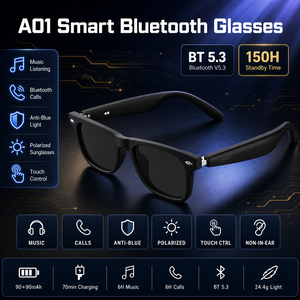
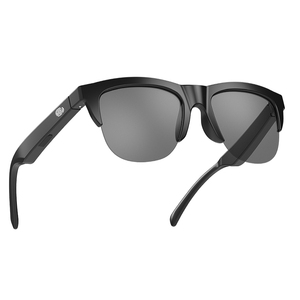
Smart audio eyewear representing a fusion of optical frames, open-ear acoustic channels, ultra-thin lithium polymer batteries, and AI voice interfaces is rapidly moving from niche status into volume retail. Modern ODM factories now integrate micro-cameras for object recognition, touch-capacitive temporal temples, and magnetic quick-charge points. Private-label buyers can deploy customized frame molds (TR90, acetate, lightweight titanium alloys) with integrated Bluetooth audio boards at scalable minimum order quantities (MOQs).
Regulatory frameworks across North America (FCC/UL), Europe (CE/RoHS/REACH/WEEE), and Asia-Pacific mandate eco-compliant manufacturing processes. Sourcing trends prioritize Post-Consumer Recycled (PCR) plastics for earbud cases, nickel-free charging contact pins to prevent skin allergies, and high-density lithium button cells capable of retaining >80% capacity after 500 charge cycles. OEM suppliers providing documented carbon-footprint tracing and certified battery compliance certificates dramatically reduce market entry compliance risks.
When selecting a custom OEM wholesale TWS earbuds supplier, technical claims must be validated by production capacity, automated testing infrastructure, and demonstrated market scale. Operating as a premier manufacturing powerhouse, our facilities leverage enterprise-grade quality infrastructure calibrated for global distribution.
Our production platforms are proven across high-volume retail environments, ensuring refined PCB layouts, low RMA returns (<0.3%), and high consumer satisfaction.
Every batch undergoes automated acoustic frequency response curve matching (AP tester), IPX5/6/7 water-immersion testing, drop testing, and RF shielding verification.
Full certification readiness including CE, FCC, RoHS, KC, PSE, and TELEC, supported by automated warehousing and international freight consolidation networks.
By pairing extensive operational scale with localized ODM engineering customization—ranging from bespoke audio voice prompts and custom companion app interfaces to specialized tooling molds—we enable private label audio brands to launch market-ready solutions in as few as 25 to 40 days.
Accelerate your product launch timeline with market-tested TWS earbuds, OWS open-ear hardware, and AI smart glasses. Request complete engineering spec sheets, sample kits, and factory-direct quotation tiers today.
Get Catalog