Direct-from-factory solutions engineered for international brand owners, wholesale distributors, and cross-border retailers.
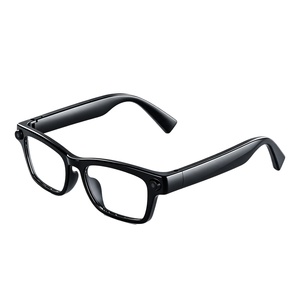
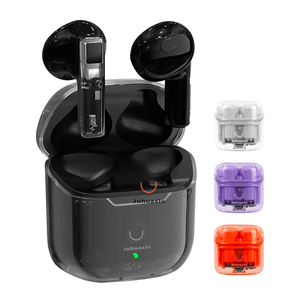

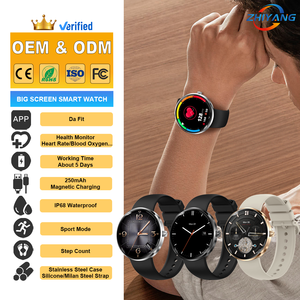
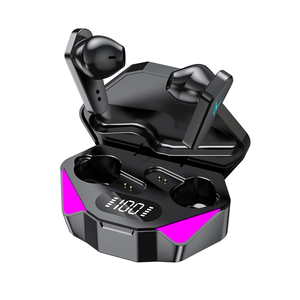
An in-depth technical analysis for global enterprise buyers, supply chain executives, and retail category managers navigating China’s electro-acoustic manufacturing hub.
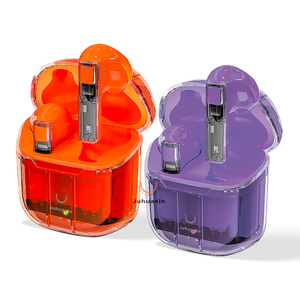
The global consumer wireless audio industry is undergoing its most radical architectural transformation since the emergence of True Wireless Stereo (TWS) in 2016. Driven by user fatigue over extended intra-concha insertion (which often causes ear canal inflammation, bacterial buildup, and spatial isolation risks), the market has rapidly pivoted toward Open Wearable Stereo (OWS) and Clip-On Earbuds. As global demand accelerates, procurement teams must evaluate Chinese export manufacturers not merely on unit cost, but on fundamental engineering capabilities—specifically micro-acoustic directional dispersion, nickel-titanium (Ni-Ti) shape-memory alloy mechanics, and low-latency Bluetooth System-on-Chip (SoC) integration.
According to industrial supply chain metrics from Guangdong's primary electronics manufacturing hubs (Shenzhen, Dongguan, and Huizhou), wholesale shipments of clip-on open-ear form factors grew by over 140% year-over-year. China’s manufacturing ecosystem commands over 85% of global output in this category, operating at an unrivaled scale that integrates precision tooling, surface-mount technology (SMT), acoustic chamber calibration, and automated sealing under unified quality management systems.
By leveraging localized component supply networks in Pearl River Delta clusters, factories achieve up to 28% reduction in bill-of-materials (BOM) costs without compromising structural or acoustic integrity.
Advanced reverse sound wave phase cancellation algorithms eliminate sound leakage by up to 18dB, ensuring confidential call privacy even in quiet office environments.
Utilizing high-flexibility medical-grade TPU and Ni-Ti memory wires, factories produce clip-on structures tested to endure over 20,000 bending cycles without structural fatigue.
Unlike traditional in-ear monitors (IEMs) that rely on airtight ear-tip occlusion to generate bass response through sealed hydraulic pressure, clip-on earbuds function via open-air acoustic projection. Achieving rich low-frequency response and pristine treble in an unsealed environment requires complex mechanical and electrical engineering:
| Acoustic Metric / Feature | Standard TWS In-Ear | Bone Conduction Headphones | Next-Gen Clip-On OWS Earbuds |
|---|---|---|---|
| Ear Canal Hygiene & Health | Low (Risk of canal occlusion & bacteria) | High (100% open canal) | Optimal (Zero canal entry, non-invasive) |
| Bass Response Performance | High (Sealed acoustic chamber pressure) | Very Low (Vibrational energy loss) | High (Large-aperture dynamic drivers) |
| Sound Leakage Mitigation | Excellent (Physical passive isolation) | Moderate (Perceived skin vibration) | Advanced (Phase negation directional audio) |
| All-Day Wearing Comfort | Moderate (Fatigue after 2-3 hours) | Moderate (Headband pressure points) | Superior (Weight distributed around pinna) |
| Manufacturing BOM Cost | Baseline ($) | Elevated ($$$) | Competitive Commercial Scale ($$) |
Combining state-of-the-art production automation, stringent QA benchmarks, and flexible turnkey OEM/ODM customization services.
Leading Chinese exporters maintain in-house industrial design teams, tooling workshops, high-speed SMT assembly lines, and acoustic testing labs equipped with SoundCheck and AP (Audio Precision) analyzers. This vertical integration reduces prototype-to-mass-production lead times from months to as few as 25 calendar days.
Export-ready factories operate under ISO9001, ISO14001, and BSCI audit frameworks. Every production lot undergoes 100% automated optical inspection (AOI), battery safety testing (UN38.3, MSDS), waterproof testing (IPX5 to IPX8 acoustic mesh seals), and global certification compliance including CE, FCC, RoHS, REACH, and TELEC.
Key technological advancements B2B buyers must evaluate when locking in multi-year supplier contracts.
Future clip-on audio hardware will increasingly rely on integrated edge-AI SoCs capable of real-time anatomical acoustic fitting. As the earbud sits outside the canal, sound reflection varies according to individual ear shape. Advanced Bluetooth 5.4/6.0 chipsets (from vendors like Bestechnic, Qualcomm, and Realtek) monitor reflected sound waves inside the outer ear cavity, dynamically adjusting frequency curves via on-chip DSP to maintain balanced tonal characteristics.
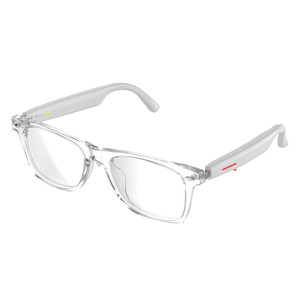
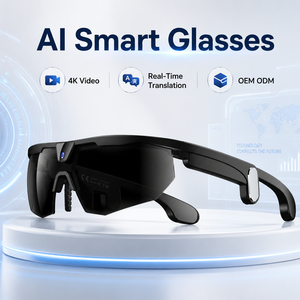
Product boundaries between clip-on earbuds, smart audio eyewear, and smartwatch ecosystems are blurring. Exporters are offering unified firmware software development kits (SDKs) that allow clip-on audio components to interface seamlessly with biometric sensors (photoplethysmography heart-rate sensors built into the ear-hook casing), AI voice assistant engines, and real-time translation servers.
Global brand buyers subject to stringent ESG (Environmental, Social, and Governance) disclosure mandates are demanding eco-friendly materials. Leading factories are integrating Post-Consumer Recycled (PCR) plastics for outer battery pods, bio-based TPU for flexible ear hooks, and 100% plastic-free soy-ink printed retail packaging, ensuring compliance with European Union eco-design mandates.
Direct technical and operational answers to assist purchasing agents, product managers, and supply chain directors.
Standard factory MOQs for off-the-shelf models with custom silk-screen logos and customized retail packaging start at 1,000 units per colorway. For complete custom tooling, bespoke structural engineering, or proprietary C-bridge mold developments, standard factory MOQs range from 3,000 to 5,000 units, aligned with chip set allocation volumes.
Tier-1 manufacturers employ directional sound conduction technology utilizing dual acoustic ports. The primary port directs targeted acoustic energy straight toward the ear canal opening, while a secondary anti-phase port emits reverse acoustic waves to cancel outward sound dispersion. This dipole phase cancellation drastically reduces ambient sound leakage even at elevated volumes.
Bone conduction transducers pass acoustic energy through temporal bone vibrations directly to the cochlea, which can cause facial tingling and restricted dynamic bass range. Air-conduction clip-on earbuds utilize specialized micro-dynamic drivers to project sound waves through the air into the ear canal, maintaining natural bass resonance, wider soundstages, and superior overall acoustic fidelity without physical skin vibrations.
Reputable export factories execute mechanical stress testing using automated pneumatic rigs. The flexible bridge (typically constructed from nickel-titanium memory wire covered in medical silicone) undergoes 15,000 to 30,000 torsion and flex cycles at extreme angles, followed by environmental chamber exposure testing (-20°C to 60°C) to ensure spring tension integrity over extended consumer lifespans.
Yes. Chinese audio factories partner directly with chipset vendors (such as Bestechnic, Realtek, Actions, and JL) to flash customized firmware. OEM buyers can request dedicated low-latency gaming modes (under 45ms), customized EQ sound profiles, specialized Bluetooth pairing strings, and advanced codec integration (AAC, SBC, LDAC, or aptX Adaptive).
For North America, products require FCC ID certification for RF emissions, along with UL/RoHS compliance for lithium-polymer batteries. For the European Union, products must carry CE (RED), RoHS, REACH, and WEE compliance. Exporters handle pre-certification testing via accredited third-party labs like SGS, TÜV Rheinland, or Intertek.
Connect directly with our engineering and export sales teams. Access detailed product catalogs, wholesale price tiers, factory audit records, and custom OEM/ODM sample kits.
Get Catalog