Precision-engineered Bluetooth 5.4 & 2.4GHz dual-mode earbuds designed for competitive gaming, sports, and low-latency audio transmission.
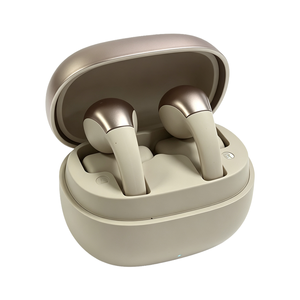
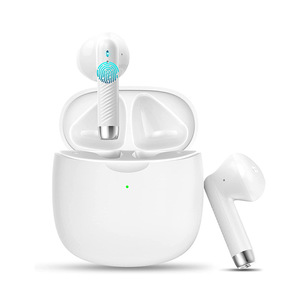
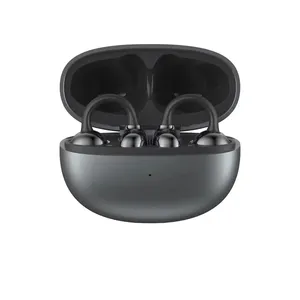
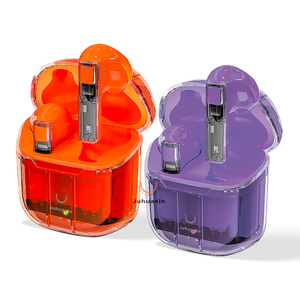
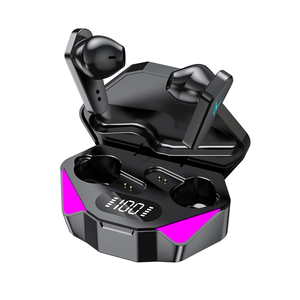
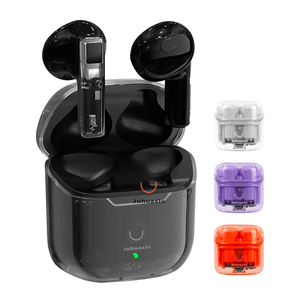
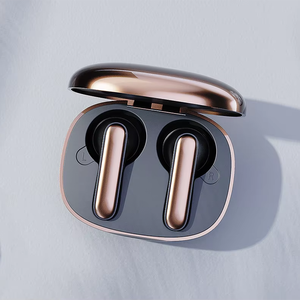
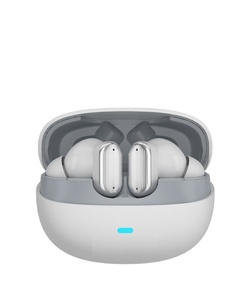
The global consumer wireless audio market has experienced a fundamental paradigm shift. Where battery efficiency and initial Bluetooth pairing speed once defined competitive differentiation, acoustic latency—measured in milliseconds (ms)—has emerged as the defining metric for brand success. Today's global buyers require seamless synchronization between visual frames and auditory output across mobile esports, FPS gaming, augmented reality (AR) interfaces, and high-bitrate live video streaming.
As the premier manufacturing hub producing over 85% of the world's True Wireless Stereo (TWS) and Open Wearable Stereo (OWS) audio hardware, China's specialized factories in Shenzhen, Dongguan, and Ningbo have engineered breakthrough chipset integration protocols. Leading manufacturers have moved beyond legacy A2DP audio profiles to embrace Bluetooth 5.4, LE Audio with LC3 codecs, and custom 2.4GHz dual-mode wireless dongle architectures capable of delivering latency under 20ms.
Information Gain Key Insight for Procurement Directors: Standard Bluetooth audio transmission introduces an intrinsic latency of 150ms to 250ms due to SBC/AAC buffer overheads. Industrial-grade OEM gaming earbuds from premier Chinese factories bypass these limitations using specialized SoC DSP pipelines, dynamic packet loss concealment (PLC), and dedicated RF dongle bridging to achieve sub-30ms performance without sacrificing acoustic fidelity.
Acoustic latency is the cumulative delay introduced at multiple stages of the signal processing chain: analog-to-digital conversion (ADC) at the host, Bluetooth packet encapsulation, RF airtime transmission, buffer queuing at the receiver, decoding by the audio SoC, and digital-to-analog conversion (DAC) driving the speaker diaphragm. China’s leading audio factories employ four primary engineering strategies to minimize total latency:
By pairing TWS hardware with a proprietary USB-C 2.4GHz RF dongle, factories achieve fixed latency down to 15ms–25ms, completely bypassing the standard Android/iOS Bluetooth stack latency.
Next-generation Bluetooth Low Energy (LE) Audio replaces legacy SBC with Low Complexity Communication Codec (LC3), reducing required bitrates while slashing encoding delay to under 10ms per frame.
Integrated SoC firmware (such as PixArt PAU19xx, JL 697N, and Realtek RTL8763) permits seamless switching between Standard Music Mode (120ms for battery saving) and Ultra Gaming Mode (35ms–55ms).
When selecting a Chinese manufacturing partner, global brand owners must compare latency benchmarks across codec technologies, transmission hardware, and operational modes. The table below details engineering specifications validated in our acoustic testing labs:
| Transmission Protocol | Codec Architecture | Average Latency (ms) | Battery Consumption | Primary Target Market |
|---|---|---|---|---|
| 2.4GHz Wireless Dongle + BT 5.4 | LC3 / Proprietary Low Latency Codec | 15ms - 25ms | 12mA - 15mA | Esports & Competitive Mobile Gaming |
| Bluetooth 5.4 LE Audio | LC3 Codec Standard | 30ms - 45ms | 6mA - 8mA | Next-Gen Smartphones & Media Streaming |
| Bluetooth 5.3 / 5.4 Gaming Mode | PixArt / Realtek Custom Game Codec | 40ms - 60ms | 9mA - 11mA | Mainstream Mobile Gaming & TWS Earbuds |
| Standard Bluetooth Audio (A2DP) | AAC / SBC Default Profile | 180ms - 250ms | 5mA - 7mA | Casual Music & Voice Calling Only |
The global earbud manufacturing market in China is undergoing a massive transformation driven by consumer demand for hybrid versatility. Sourcing directors must anticipate key hardware developments when evaluating factory tooling and R&D pipelines for upcoming product cycles:
Historically limited to in-ear designs, Open Wearable Stereo (OWS) clip-on earphones are now integrating low-latency chipsets. This allows outdoor sports users and gamers to maintain situational awareness without sound lag.
Low latency gaming mode is no longer deployed in isolation. Top China factories are co-packaging Active Noise Cancellation (up to -42dB) and AI dual-microphone Environmental Noise Cancellation (ENC) for crystal-clear team communication.
Visual aesthetics have shifted toward cyber-transparent acrylic cases featuring digital LED battery percentage bars, dynamic RGB lighting strips, and capacitive touch control smart screens integrated directly onto the case charging cradle.
Building high-performance low latency wireless earbuds requires rigorous acoustic calibration, RF isolation, and surface finishing. Premier OEM/ODM factories in China adhere to multi-stage quality control protocols to ensure zero defects across mass production runs:
1. RF Anechoic Chamber Testing: Every earbud antenna design undergoes 3D Over-The-Air (OTA) testing inside RF shielded chambers to guarantee consistent wireless throughput and minimal packet re-transmission in crowded 2.4GHz environments.
2. Audio Precision (APx555) Latency & Frequency Calibration: Production lines utilize industry-standard Audio Precision analyzers to measure dynamic frequency response curves (20Hz–20kHz), total harmonic distortion (THD < 0.5%), and true end-to-end latency before packaging.
3. Environmental & Durability Testing: Earbuds are subjected to IPX5-IPX7 liquid ingress testing, salt-spray anti-corrosion trials for charging pins, 1.5-meter drop tests, and 10,000-cycle charging case hinge endurance evaluations.
Supply Chain Security Note: Reliable manufacturing partners provide complete Bill of Materials (BOM) transparency, offering tier-1 battery cells with integrated NTC thermal protection circuitry, premium titanium-plated dynamic drivers, and certified Bluetooth SIG listing assistance.
Clear, definitive answers to common procurement questions asked by international buyers, retail brands, and wholesale distributors searching for Chinese acoustic factories.
For ready-to-ship neutral stock models, MOQ starts as low as 100 to 500 units. Custom logo printing and branded packaging typically require an MOQ of 1,000 units. Full ODM private mold creation with custom chipset firmware customization requires 3,000 to 5,000 units.
Factories achieve low latency by optimizing firmware to compress audio packets with low-overhead algorithms, reducing buffer window size, and utilizing Bluetooth 5.3/5.4 high-speed frequency hopping to minimize packet re-transmission delays.
Export-ready products comply with CE, FCC, RoHS, REACH, Telec, KC, and BQB (Bluetooth SIG) certification standards. Factories provide full lab test reports and compliance documentation for customs clearance.
Yes. OEM services include custom DSP sound tuning (such as extra bass booster or vocal clarity modes) as well as custom voice prompts in any language when switching between Music Mode and Low Latency Gaming Mode.
Standard sample dispatch takes 3 to 5 working days. Customized OEM mass production runs are completed within 18 to 25 calendar days upon sample confirmation and deposit approval.
Leading factories supply 12 to 24 months of formal warranty coverage alongside a 1% spare parts allotment (charging cases, ear tips, logic boards) for seamless local RMA support.
Access direct wholesale pricing, request private tooling samples, or request full customized OEM/ODM specifications from our acoustic engineering team today.
