ISO13485 & BSCI Certified OEM/ODM Factory

China Best Heart Rate Smartwatch Manufacturers & Factory

B2B Manufacturing Intelligence, Medical-Grade PPG Sensor Integration, & Global Supply Chain Solutions for Enterprise Brands

Featured Smart Wearable & Audio Lineup

Precision-engineered smartwatches, smart glasses, and wireless audio components crafted for high-volume global distribution and private label OEM partners.
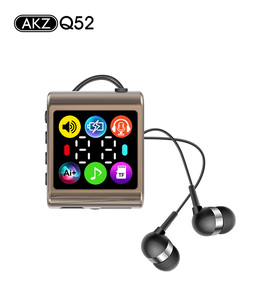
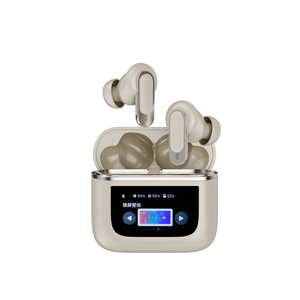
Q53/Q52 Wireless Earbuds Lavalier Ear with LED Screen

Q53/Q52 Wireless Earbuds Lavalier Ear with LED Screen TF Card Support

ENC Noise Cancelling TF Card Playback LED Battery Display
Luxury Bone Conduction Audio Smart Glasses

2024 Luxury Men Women Bone Conduction Glasses Smart Audio Sunglasses

Bluetooth 5.0 100H Playtime Open-Ear Audio
Bluetooth 5.4 ANC+ENC TWS Earbuds with Full Color Touch Screen

Bluetooth 5.4 ANC+ENC TWS with Full Color Touch Screen Wireless Earbuds

Touch Screen Case ANC Noise Control IPX4 Waterproof
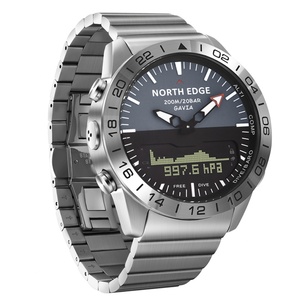
NORTH EDGE Mens Dive Watch Steel Smartwatch

NORTH EDGE Mens Dive Watch Luxury Steel Smartwatch Compass Barometer

200m Waterproof Altimeter & Compass 316L Stainless Steel
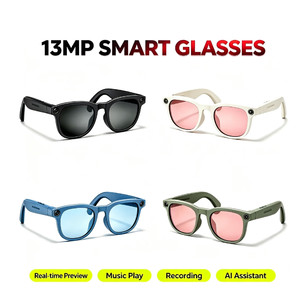
AI Smart Glasses 1300W HD Camera ChatGPT Control

AI Smart Glasses 1300W HD Camera WIFI ChatGPT Gesture Control

13MP HD Camera ChatGPT Integration AI Live Translation
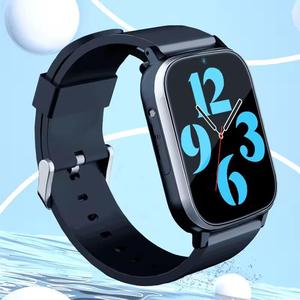
FA91 High Quality Kids GPS Smart Watch 4G

FA91 Kids GPS Smart Watch 4G Video Calling Live Location Tracker

4G Video Call Real-Time GPS SOS Emergency Button
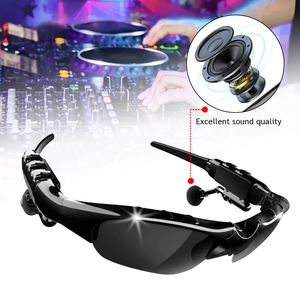
Smart Audio Glasses Outdoor Sports Cycling Headphones

5.0 Smart Audio Glasses Outdoor Sports Cycling Surround Sound Headphones

Polarized Lenses Surround Audio UV400 Protection
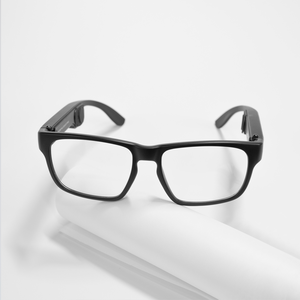
Smart Glasses E13 F1 Black Technology AI Translation

Smart Glasses E13 F1 AI Translation Touch Voice Control Ultra Durable PC

Voice Assistant Touch Control HD Calling
50M+
Global Units Shipped
5M+
Verified Consumer Reviews
±1 BPM
Optical Heart Rate Accuracy
1 Unit / 5s
Automated Production Speed

Executive Whitepaper: China Heart Rate Smartwatch Manufacturing Ecosystem

An engineering and supply chain analysis of biometric wearable production, sensor fusion technology, and OEM/ODM factory selection criteria in China.

The global wearable technology sector has experienced a profound shift from basic step-counting fitness trackers to medical-grade biometric monitoring hubs worn on the wrist. At the center of this technological revolution is China's advanced manufacturing supply chain—headquartered in the Shenzhen-Dongguan hardware ecosystem—which produces over 80% of the world's smartwatch units. Navigating this ecosystem to locate the best heart rate smartwatch manufacturers and factories in China requires an in-depth understanding of optical Photoplethysmography (PPG) sensor integration, signal processing algorithms, micro-electro-mechanical systems (MEMS), and international regulatory compliance frameworks.

Modern heart rate smartwatches do not merely measure pulse rates; they serve as continuous cardiological monitoring nodes capable of detecting Atrial Fibrillation (AFib), calculating Heart Rate Variability (HRV), estimating arterial stiffness, and tracking continuous blood oxygen saturation (SpO2). For global brand owners, healthcare enterprise buyers, and consumer electronics distributors, securing a manufacturing partner in China demands evaluated rigor across four foundational pillars: biometric algorithm accuracy, SMT surface-mount manufacturing quality, waterproof structural sealing, and long-term supply chain reliability.

1. Engineering Architecture of Optical Heart Rate (PPG) Sensors

At the core of every premium heart rate smartwatch produced by top China factories is the optical PPG sensing sub-assembly. Photoplethysmography operates by emitting specific wavelengths of light—typically 525nm green light for superficial dermal capillary measurement, alongside 660nm red and 940nm infrared light for peripheral blood oxygenation—into the skin tissues and measuring the reflected light intensity modulated by pulsatile blood volume changes.

Multi-Channel Optical Arrays

Top-tier factories utilize 4-LED or 8-LED ring arrays paired with multi-PD (Photodiode) configurations to minimize spatial skin variance and maximize signal-to-noise ratio (SNR).

Motion Artifact Cancellation

Advanced factories integrate 6-axis MEMS accelerometers directly with PPG Analog Front-End (AFE) chips to execute adaptive Kalman filtering algorithms that eliminate motion noise during intense exercise.

Epidermal Tone Calibration

Automated factory optical calibration setups fine-tune drive current (up to 200mA) dynamically across dark skin tones and tattoos to maintain accuracy within ±1 BPM standards.

Technical Benchmark Matrix: Entry-Level vs. Medical-Grade Smartwatch OEM Specifications

Architecture Feature Consumer Entry-Level Tier Pro Sports & Outdoor Tier Medical-Grade Enterprise Tier
Optical Sensor AFE Single-Green LED / Single PD Dual-Green + IR / Quad PD Array Multi-Wavelength (Green/Red/IR) + Single-Lead ECG
Sampling Frequency 25 Hz - 50 Hz Static 100 Hz Continuous Dynamic 250 Hz - 500 Hz High-Fidelity Cardiological Sampling
Main Processor (MCU) Single-core BLE 5.0 SoC Dual-Core ARM Cortex-M33 (e.g., Ambiq/Nordic) Ultra-Low-Power NPU-accelerated Sensor Hub SoC
Water Ingress Protection IP67 / IP68 (1.5m Static Water) 5ATM (50m Pressure Seal) 10ATM / 200m Dive-Grade Hermetic Sealing
Factory Testing Rigor Visual Inspection + Basic Function Check 100% Automated Pressure Chamber + Optical Jigs ISO13485 Cleanroom Assembly + Darkroom Calibration

Future Sourcing & Tech Trends (2025 - 2030 Roadmap)

Strategic insights for B2B procurement directors, brand executives, and product developers preparing for the next wave of wearable innovations.

Trend 1: Fusion of Non-Invasive Metabolic & Cardiac Monitoring

Leading Chinese smartwatch manufacturers are actively moving beyond standard pulse reading. Next-generation factory platforms integrate PPG micro-spectroscopy with bio-impedance sensors to deliver non-invasive continuous blood glucose trend tracking, blood pressure monitoring via Pulse Transit Time (PTT), and real-time lactate threshold calculation. Brands sourcing in 2025+ must prioritize factories offering modular Sensor Fusion SDKs that support multi-metric health correlation.

Trend 2: Edge-AI & On-Device Machine Learning Models

Cloud-dependent health analysis introduces latency and privacy bottlenecks. Premium China factories are embedding micro-Neural Processing Units (NPUs) into system-on-chip (SoC) microcontrollers. This allows smartwatches to run tinyML algorithm models locally on the device, identifying subtle cardiac arrhythmia patterns (such as Premature Ventricular Contractions) in under 300 milliseconds while consuming less than 1.5mA of working current.

Trend 3: Ultra-Low Power AMOLED Displays & Hybrid Micro-LED

Display technology is undergoing a paradigm shift. Sourcing demand is heavily shifting toward high-brightness (1,000+ Nits outdoor readable) flexible AMOLED displays featuring Low-Temperature Polycrystalline Oxide (LTPO) backplanes. LTPO dynamically drops refresh rates to 1Hz during Always-On Display (AOD) mode, extending battery longevity from days to weeks while preserving vivid health dashboard graphics.

Trend 4: Biocompatible Materials & Eco-Sustainable Manufacturing

Environmental regulations such as EU RoHS 3.0, REACH, and strict ISO 10993 skin biocompatibility standards require factories to audit every raw material batch. Importers are increasingly specifying surgical-grade 316L stainless steel, lightweight TC4 titanium alloy casings, and hypo-allergenic liquid silicone or fluororubber straps produced via zero-emission compression molding.

Request 2025 Future Sourcing & Technical Roadmap

Why Partner with Our OEM/ODM Manufacturing Plant

Proven scale, medical certification credentials, and end-to-end engineering infrastructure built over 15+ years of smart wearable manufacturing.

Automated High-Speed SMT

Equipped with high-precision Fuji and Yamaha surface-mount lines capable of 0201 component placement, rigid-flex PCB assembly, and 3D Automated Optical Inspection (AOI).

Full Regulatory Compliance

Certified under ISO 9001, ISO 13485 (Medical Devices), BSCI, and SMETA. Products carry native CE, FCC, RoHS, REACH, and UN38.3 battery certifications.

Software & SDK Customization

In-house team of 120+ software engineers providing custom iOS/Android companion app white-labeling, cloud API integration, and proprietary UI design customization.

50 Million+ Proven Deliveries

A battle-tested global footprint supplying tier-1 retail brands and distributors across North America, Europe, India, and Southeast Asia with zero supply chain delays.

Rigorous Environmental QC

Every unit undergoes thermal shock testing (-40°C to +70°C), 1.5m drop tests, salt spray corrosion tests, and hydrostatic pressure testing before packaging.

Competitive OEM Pricing

Direct factory-floor pricing enabled by vertical supply chain integration—combining tooling, injection molding, SMT, assembly, and testing under a single roof.

Frequently Asked Questions (B2B Procurement Guide)

Essential answers regarding factory audits, customization capabilities, MOQs, certification compliance, and quality guarantee policies.

What makes a China smartwatch factory qualified to produce medical-grade heart rate monitoring devices?
A qualified medical-grade factory must hold ISO 13485 certification (Quality Management System for Medical Devices). Technologically, the factory must possess dedicated darkroom optical testing stations equipped with calibrated photodetectors and simulator rigs to benchmark optical heart rate (PPG) algorithms against hospital-grade ECG reference devices (such as Welch Allyn or Fluke simulators). Furthermore, cleanroom assembly facilities (Class 100,000 or better) are required to prevent dust contamination between the optical photodiode cover glass and the PCB assembly.
What is the typical Minimum Order Quantity (MOQ) for OEM and ODM smartwatch orders in China?
Minimum Order Quantities depend on the depth of product customization:
  • Standard Factory Models (Ready-to-Ship Neutral Packaging): 100 to 500 units.
  • Private Label Logo Customization (Custom Screen Printing & Gift Box): 1,000 units.
  • Deep ODM Hardware Customization (Custom PCB Layout, Industrial Design Tooling, Custom Color Injections, & Dedicated Firmware SDKs): 3,000 to 5,000 units per production run.
How do China manufacturers ensure optical heart rate accuracy across different skin tones and dynamic exercise?
Top-tier manufacturers employ a multi-faceted engineering approach:
  1. Hardware Level: Incorporating high-drive-current optical transmitters with multi-wavelength light sources (525nm Green for light skin, 660nm Red / 940nm IR for darker skin tones and deeper tissue penetration).
  2. Algorithm Level: Utilizing adaptive gain control (AGC) coupled with 6-axis accelerometer motion artifact suppression algorithms. When a user runs, arm movement introduces mechanical noise; the accelerometer feeds real-time motion data to the PPG processor, which subtracts motion frequencies from optical signal waveforms.
Can the factory provide API/SDK documentation for integration with our own enterprise software or health platform?
Yes. Reliable OEM/ODM factories provide complete Android and iOS SDK documentation, open Bluetooth Low Energy (BLE) communication protocols, and data packet structure maps. This allows your software team to push raw biometric data—such as real-time heart rate intervals (RR intervals), step counts, SpO2 percentages, and sleep telemetry—directly into your proprietary cloud platform, hospital management system, or corporate wellness application.
What certifications are mandatory for importing heart rate smartwatches into North America and the European Union?
For global compliance, your shipment must satisfy specific regional mandates:
  • European Union (EU): CE-RED (Radio Equipment Directive), RoHS (Restriction of Hazardous Substances), REACH compliance, and EN 62479 (EMF health exposure). If classified as a medical wellness device, CE-MDR registration is required.
  • North America (USA/Canada): FCC ID (Part 15C for intentional radiators), UN38.3 & IEC 62133 for lithium-polymer battery safety, and FDA registration if health claims venture into medical diagnostics.
Our factory handles complete compliance documentation and testing with third-party labs including TÜV SÜD, SGS, and Intertek.
What quality assurance (QA) steps are conducted on the production line prior to shipment?
Our factory enforces a rigorous 5-stage Quality Assurance system:
  1. IQC (Incoming Quality Control): 100% testing of raw display panels, optical PPG sensors, batteries, and IC chips.
  2. IPQC (In-Process Quality Control): SMT 3D-AOI inspection, RF frequency tuning in shielded chambers, and automated solder paste verification.
  3. FQC (Final Quality Control): 100% hydrostatic water pressure chamber testing (5ATM/IP68) and 24-hour battery burn-in aging tests.
  4. OQC (Outgoing Quality Control): AQL 1.0/2.5 sampling inspection covering cosmetic finishing, drop resistance, button tactile feedback, and packaging integrity.
What is the standard production lead time for bulk OEM smartwatch orders?
Standard sample delivery takes 3 to 5 working days for neutral models and 7 to 10 days for customized logo samples. Mass production turnaround for repeat orders is typically 25 to 30 calendar days following deposit payment and artwork confirmation. For new ODM projects requiring plastic injection mold fabrication and custom tooling, the initial lead time ranges from 45 to 60 days.

Ready to Scale Your Smart Wearable Product Line?

Connect directly with our engineering and B2B sales team to request factory pricing, engineering documentation, or custom OEM sample evaluations.

Contact Us