High-reliability hardware tested under CE RED directives, IP67/IP68 submersion standards, and advanced bio-tracking sensor specifications for global brand partners.
BLE 5.1 | IPX7 Waterproof
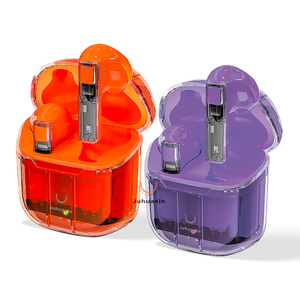
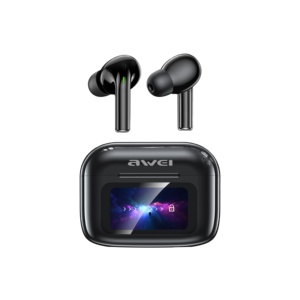
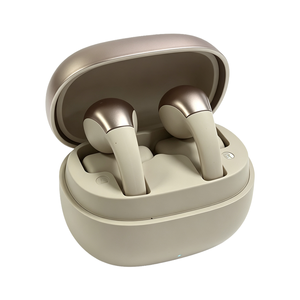
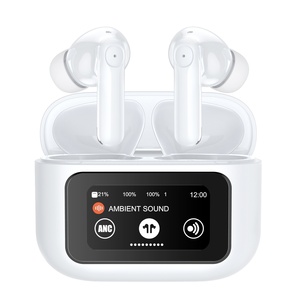
For 5.1 In-Ear Wireless Earphones Low Latency LED Battery Indicator IPX7 Waterproof
1. Strategic Overview: Enterprise Manufacturing Authority & CE Compliance Certification
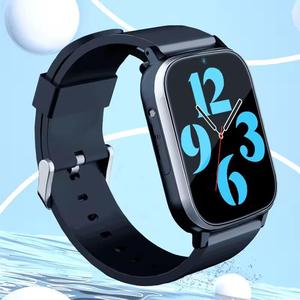
The global wearable technology ecosystem has undergone a paradigm shift, transitioning from basic pedometer step-counting accessories into critical bio-metric surveillance instruments and everyday voice communication nodes. For enterprise brand managers, regional consumer technology distributors, and corporate procurement directors, partnering with a CE certified waterproof fitness watch manufacturer is no longer merely about aesthetic design—it is fundamentally about structural reliability, RF stability, optical sensor calibration, and verified compliance with strict European Conformity (CE) directives.
European conformity mandates rigorous validation across several critical legislative directives, including the Radio Equipment Directive (RED 2014/53/EU), Electromagnetic Compatibility (EMC Directive 2014/30/EU), Low Voltage Directive (LVD 2014/35/EU), and the Restriction of Hazardous Substances (RoHS Directive 2011/65/EU as amended by 2015/863). As an industry-leading OEM/ODM smart wearable manufacturer with over 50 million units sold globally and backed by over 5 million verified product reviews, our automated manufacturing facilities operate at a scale capable of producing one finished smart wearable device every 5 seconds. This institutional volume is supported by ISO 9001 and ISO 14001 quality management systems, guaranteeing that every mass-produced device satisfies identical electrical, optical, and mechanical tolerances.
Technical Insight on CE Certification Integrity: CE compliance for smart fitness watches requires multi-frequency RF testing of Bluetooth Low Energy (BLE 5.3/5.4) radios, SAR (Specific Absorption Rate) safety evaluation to prevent thermal tissue dissipation, and strict electrochemical battery protection circuit safety under EN IEC 62133-2 standards. Sourcing certified wearables protects brands from customs seizures, consumer product safety liabilities, and costly recall operations in regulated markets.
2. Technological & Development Trends in Waterproof Smartwatches (2025–2030)
The rapid acceleration of micro-electronics, low-power display technology, and machine-learning algorithms has driven five pivotal technological shifts across the waterproof fitness watch manufacturing landscape:
Advanced Micro-Mold Waterproof Acoustic Sealing
Integration of liquid silicone injection molding (LSR) combined with acoustic hydrophobic mesh membranes (IP68 & 5ATM ratings). Devices withstand continuous 50-meter dynamic water immersion while retaining crystal-clear speaker and microphone functionality for Bluetooth calling.
Multi-Spectral PPG & Bio-Sensor Integration
Evolution from single-green-LED optical sensors to multi-path, multi-spectral PPG arrays integrating 660nm (Red), 940nm (Infrared), and dual-wavelength green LEDs. Enables precise real-time SpO2 monitoring, continuous heart rate variability (HRV), and clinical-grade sleep staging algorithms.
Ultra-Bright AMOLED Display Engines
High-contrast, low-power AMOLED display modules achieving peak outdoor brightness levels exceeding 1,000 nits. Features integrated Hardware Always-On Display (AOD) controllers running on ultra-low-power co-processors to preserve battery longevity during continuous exercise tracking.
2.1 Edge AI & On-Device Neural Processing
Modern enterprise procurement increasingly demands on-device machine learning capabilities. By embedding sub-milliwatt AI accelerator cores inside smart watch microcontrollers (MCUs), smartwatches can now run local gesture recognition, automated activity detection (swimming, running, cycling, rowing), and ambient noise suppression without sending raw voice telemetry to external cloud servers. This reduces Bluetooth latency, extends operating battery lifespans, and safeguards user data privacy in accordance with GDPR mandates.
2.2 Hybrid Form Factor Convergence: Smart Glasses & Wearables
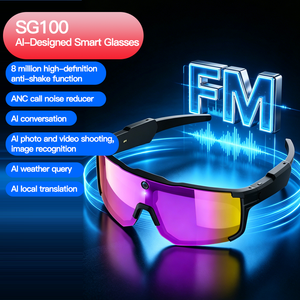
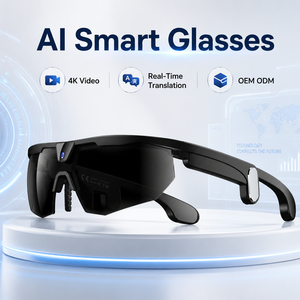
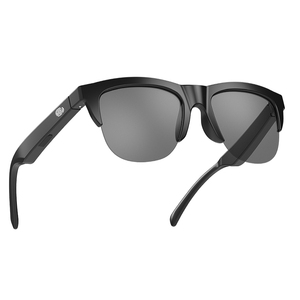
The boundaries between traditional wrist-worn wearables and modern head-worn audio glasses are dissolving. As showcased in our OEM/ODM product portfolio, smart glasses incorporating directional open-ear audio, real-time AI translation engines, and camera recording functionality are forming unified wearable ecosystems. Brand owners can now offer synchronized fitness and audio hardware that pairs seamlessly through unified companion smartphone applications.
3. Global B2B Sourcing & Procurement Trends
Strategic purchasing managers evaluating supply chain partnerships for waterproof fitness watches must navigate shifting consumer expectations, strict international trade regulations, and evolving firmware requirements. Key procurement trends shaping the next decade include:
Demand for Modular OEM Customization (SDK/API Access): Tier-1 buyers no longer accept rigid turnkey hardware. Brand owners demand customized Bluetooth firmware, custom boot logos, proprietary UI/UX themes, and localized health companion applications with open REST APIs for enterprise wellness platform integration.
Strict Material Traceability & RoHS/REACH Auditing: Compliance extends beyond basic electronics. Watch straps, metallic buckles, and housing polymers require bio-compatibility testing (ISO 10993) to prevent skin contact allergies, accompanied by full REACH SVHC chemical registration docs.
Shift Toward All-in-One Multi-Category Sourcing: Retail buyers are consolidating vendor bases to reduce logistical complexity. Sourcing smartwatches, TWS open-ear clip earbuds, and smart audio eyewear from a single unified manufacturer ensures uniform QA standards, streamlined customs clearance, and shared component economies of scale.
Sustainability & Battery Circularity Directives: The upcoming EU Battery Regulation requires transparent carbon footprint documentation, ethical cobalt/lithium supply chain sourcing, and high cycle-life endurance (retaining >80% capacity after 500 charge cycles).
Procurement Metric
Standard Market Tier
Enterprise OEM / Fire-Boltt Standard
B2B Sourcing Value Impact
Waterproof Rating
IP67 (1m Static Water)
IP68 & 5ATM Hydrostatic Dynamic Test
Eliminates water ingress warranty claims
Display Tech
Basic IPS / LCD Backlit
AMOLED (1000+ Nits, AOD Enabled)
Higher retail margin & premium user positioning
Compliance Certs
Basic Self-Declaration
Full CE (RED, EMC, LVD), RoHS, REACH, FCC
Seamless global customs entry & zero recall risk
Production Capacity
10k - 50k units / month
50M+ Shipped Track Record (1 unit / 5 sec)
High scalability for peak seasonal inventory demands
Firmware Customization
Fixed Turnkey FW
Complete App/FW SDK & UI Localization
Direct brand identity control & software monetization
Our organization’s position as a global leader in consumer technology is grounded in a deep commitment to manufacturing excellence, supply chain transparency, and comprehensive product support ecosystems. We provide end-to-end OEM and ODM services tailored to multinational brands, regional importers, and retail chains.
4.1 Seven-Stage Automated Quality Control (QC) Pipeline
To deliver zero-defect batches across mass manufacturing runs, every waterproof smartwatch undergoes a non-negotiable 7-stage automated testing protocol before final packaging:
SMT Optical Inspection (AOI): 100% automated surface-mount inspection of PCBA components to verify solder joint integrity and chip placement precision.
RF Chamber Wireless Calibration: Automated tuning of Bluetooth antenna frequency, power output, and receiver sensitivity inside localized Faraday cages.
Dual-Stage Hydrostatic Pressure Testing: Vacuum chamber air-leak detection followed by positive hydrostatic pressure submersion equivalent to 50 meters depth.
Optical Bio-Sensor Calibration: Spectrophotometer-driven optical light output and photodiode signal calibration against simulated human skin tissue.
Thermal Shock Environment Stressing: Rapid cycling between extreme temperatures (-20°C to +60°C) to verify structural housing expansion tolerance.
Battery Burn-in & Aging Cycle: Full charge-discharge stress testing to detect early voltage dropouts or lithium-cell impedance anomalies.
Drop & Torsion Mechanical Endurance: Automated robotic drop testing on steel surfaces and wristband torsion tension testing.
4.2 Strategic Sourcing Advantages for Brand Partners
By leveraging an installed customer base exceeding 50 million users, our hardware platforms have been market-tested across diverse climatic zones, user demographics, and usage scenarios. This massive empirical dataset feeds back directly into our R&D cycle, allowing us to proactively resolve potential hardware or software bottlenecks long before mass production begins.
Below are authoritative responses to common technical, legal, and operational inquiries raised by enterprise procurement officers and supply chain directors:
What specific CE directives do your waterproof fitness watches comply with?
Our smartwatches undergo formal laboratory testing to comply with the EU Radio Equipment Directive (RED 2014/53/EU), including EN 300 328 for Bluetooth spectrum usage, EN 301 489 for electromagnetic compatibility, EN 62479/50663 for RF exposure (SAR), and EN 62368-1 for electrical safety. Full Declaration of Conformity (DoC) and test reports are provided for custom clearance.
What is the difference between IP68 and 5ATM waterproof ratings in smartwatch production?
IP68 certification verifies protection against dust ingress and continuous static water immersion (typically up to 1.5 to 3 meters depth for 30 minutes). A 5ATM rating certifies that the device can withstand dynamic water pressure equivalent to 50 meters depth, making it suitable for high-velocity swimming, rain exposure, and surface water sports. We offer dual IP68/5ATM validation protocols depending on product specifications.
What MOQ (Minimum Order Quantity) and lead times apply to OEM/ODM custom orders?
For standard white-label OEM customization (laser-engraved logo, customized packaging, and pre-installed firmware boot graphics), MOQs start at 1,000 units per colorway with production lead times of 18–25 days. Deep ODM projects requiring custom industrial tooling molding, housing modifications, or specialized PCB design carry custom project milestones outlined during technical engineering reviews.
Can you customize the companion mobile application and firmware UI for our brand?
Yes. We offer complete firmware branding (UI themes, localized multi-language fonts, custom watch face libraries) and can supply white-label companion iOS/Android applications built under your brand's developer account. SDK/API access is available for integration into enterprise corporate health platforms.
How are lithium batteries certified for international air and ocean freight shipping?
All integrated rechargeable lithium-polymer batteries are certified under UN38.3 (United Nations Transport Regulations), MSDS (Material Safety Data Sheets), and IEC 62133 safety standards. Cargo is packaged according to IATA Dangerous Goods Regulations (PI967) to ensure smooth international logistics clearance.
Do you offer warranty registration support and structured after-sales RMA processes?
Yes. We provide comprehensive technical documentation, continuous software updates, spare parts inventory allocation (such as straps, charging cables, and housing units), and structured technical support protocols to ensure seamlessly low RMA rates for distributors and retail partners.
Ready to Scale Your Smart Wearable Line up?
Partner with a market-proven, CE-certified manufacturer. Request custom engineering samples, factory audit reports, and bulk wholesale pricing today.